Postpartum Loneliness: When It's Normal, When It's Not, and How to Rebuild Your Village
You don't have to navigate this alone. Our PMH-C certified therapists specialize in exactly what you're going through — and help is available this week.

Written by
Expert health information, double-checked for accuracy and written to be helpful.
Last updated
Written by
Expert health information, double-checked for accuracy and written to be helpful.
Last updated
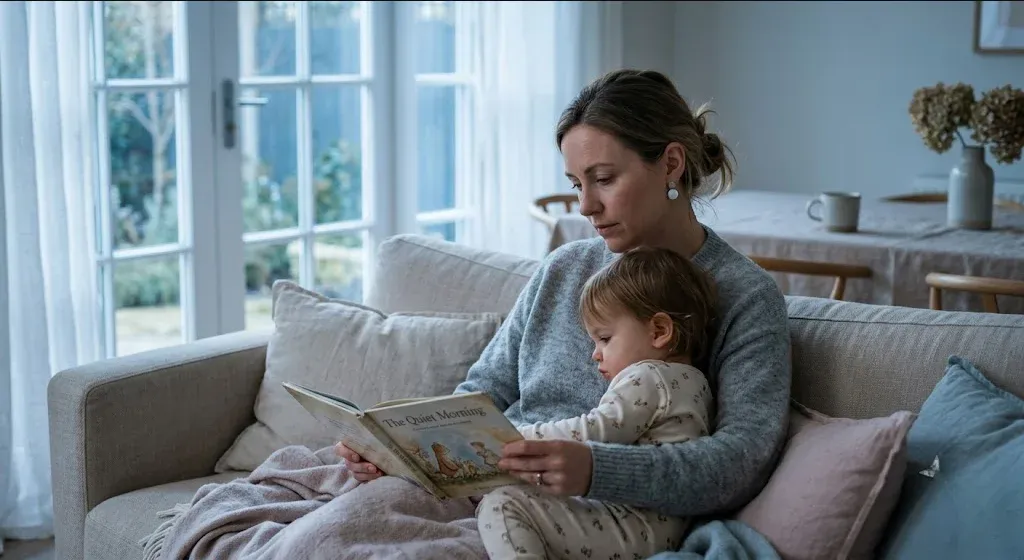
You're sitting in your living room with your baby asleep against your chest. Your partner is ten feet away. Maybe your mother is visiting for the week, asleep down the hall. The house is full of people who love you, and you have never felt so completely alone in your life. If that contradiction confuses you, here's the first thing to know: it doesn't mean you're ungrateful, and it doesn't mean something is wrong with your relationships. It means you're dealing with something real, common, and worth taking seriously.
Postpartum loneliness is the gap between the people around you and the connection you actually need after having a baby. It happens because your social circle contracts, your identity shifts, and the specific kind of understanding you're craving is hard to find, even in a full house. It's common, it's addressable, and it's different from postpartum depression, though the two can look similar from the outside.
Below, you'll find a way to check what you're feeling against what a clinical condition looks like, real scripts for asking for help, and tiered ways to rebuild connection depending on how much energy you have today.
Signs & Symptoms
These experiences are more common than you might think — and they are not your fault.
- Declining invitations you would have said yes to before, because getting out the door feels like too much
- Feeling like an outsider at a mom group or parent meetup, like everyone else already knows each other
- Letting calls go to voicemail from people you'd normally pick up for, because you don't have the energy to explain how you're really doing
- Dreading the question "how are you?" because the honest answer feels like too much to hand someone
- Feeling unseen even when your partner or family is right there in the room with you
- Missing the version of yourself who used to have easy, unplanned conversations with other adults
How Building Support Systems Is Treated
Individual Therapy
A perinatal therapist can help with the identity grief that comes with matrescence. They can also help with the specific barriers making it hard for you to reach out, and with telling the difference between loneliness and something more clinical, like postpartum depression or perinatal anxiety. Most Phoenix Health therapists hold PMH-C certification from Postpartum Support International. That means they're trained specifically in this period of life, not treating it as a generic stressor. You don't have to already know which category you're in before you start. Sorting that out is part of the work.
Peer and Group Support
Peer support works best when it matches your actual energy that day, not the energy you wish you had. On low-capacity days, text-based or app-based peer support lets you get psychoeducation and coping strategies without the pressure of a real-time conversation. As your energy comes back, structured virtual groups can help. Scheduled around a specific topic or time, they lower the social pressure of open-ended mingling while still connecting you with other parents in the same stretch of early parenthood. When you have more to give, in-person options like a stroller walking group or a parent-baby class add movement, plus the kind of ongoing, local friendship that's harder to build online.
Couples Therapy
When loneliness comes from feeling unseen by your partner rather than from your social circle, couples therapy gives you a structured space to renegotiate who does what and how you talk about it. A therapist can help you both name the unequal load without it turning into blame. Together you can build the kind of specific, direct communication that actually changes what happens at 3 a.m., not just how the conversation about it goes.
Key Takeaways
- Postpartum loneliness is extremely common, though the exact numbers vary depending on how researchers ask the question.
- You can feel lonely even surrounded by people who love you. That's a specific, documented pattern, not a personal failing.
- Loneliness and postpartum depression are different experiences with different fixes, and a short self-check can help you tell them apart.
- Specific, small requests ("can you take the 3 a.m. feed Saturday") get better results than vague ones ("call me sometime").
- Support can be tiered to match your energy: some options work on your lowest-capacity days, others when you have more to give.
How Common Is Postpartum Loneliness, Really?
You've probably seen two very different numbers attached to postpartum loneliness. One says 90 percent (nearly everyone) of new mothers experience it. Another says 51 percent (about half). Neither number is wrong, but they're measuring different things, and no one usually explains that.
The 90 percent figure comes from a 2017 online poll of about 2,000 mothers run by the UK parenting platform ChannelMum.com. It asked a broad question: has this ever happened to you? Because the bar for "yes" is so low, the number captures almost everyone, including women who felt isolated for a day or two and then reconnected.
The 51 percent figure comes from a stricter study. Researchers at the Harvard Graduate School of Education's Making Caring Common project asked parents whether they felt lonely "frequently" or "almost all the time" over the past month, a definition aimed at serious, ongoing loneliness rather than a passing hard week. This is the number delegates from the American Psychiatric Association and the American Medical Association have cited when describing parental loneliness as a public health concern.
51% (about half) of new parents report "serious," ongoing loneliness, the stricter of the two commonly cited figures. Source: the Harvard Graduate School of Education's Making Caring Common project. ~90% (nearly everyone) report having felt lonely at some point since childbirth, a much broader, one-time-poll definition. Source: a 2017 ChannelMum.com online poll.
So which number is true for you? Probably somewhere in between, and that's fine. A broad research review of postpartum loneliness studies worldwide found rates ranging from about a third of mothers to nearly all of them, depending on how researchers asked the question. The honest takeaway isn't a single figure. It's that feeling this way after having a baby is extremely common, whether you're having an occasional hard stretch or something more constant.
When you see a loneliness statistic, ask what it's actually measuring. If a headline number feels too big or too small to match your own experience, that usually means it's measuring something different than what you're feeling, not that your feelings are wrong.
Why Postpartum Loneliness Happens
Becoming a parent is a bigger identity shift than most people expect. Researchers call it matrescence: a psychological transition into motherhood, similar in scale to adolescence. Before the baby, you had a working identity built over years. A job, friendships, routines, a sense of competence. After, you're handed a brand-new role, around the clock, while everyone else seems to act like you should already know how. That gap between what you expected motherhood to feel like and what it actually feels like can trigger real grief for the person you were. It can also bring shame about grieving something you're also grateful for.
At the same time, your actual social world shrinks. Fragmented sleep, physical recovery, and a newborn's unpredictable schedule make it hard to keep up with people who don't have a baby. Coworkers and child-free friends often can't relate to what your days look like now. Many parents describe the exact same pattern: friends who used to text daily seem to evaporate once the baby arrives. It's rarely cruelty. The friendship simply had no scaffolding built for this stage of life. You're left with long, solitary stretches at home holding a baby, cut off from the adult conversation that used to happen automatically.
There's a physical layer to this too. Your body releases a stress hormone from the placenta that rises sharply in the last months of pregnancy. One study found that people who felt well-supported during pregnancy had a steadier rise in this hormone. People who felt unsupported had sharper spikes. Those spikes were linked to a higher risk of depression symptoms after birth. Connection isn't just emotionally nice to have. It appears to physically buffer your body against some of the biology behind postpartum depression.
Here's why the standard advice ("join a mom group!") sometimes falls flat: postpartum loneliness actually comes in two different shapes, and they need different fixes. One is simply not having enough people around you. A mom group, a stroller walk with another parent, a coworker who checks in: any of these can genuinely help, because what you're missing is more people in the rotation. The other is having people around you, plenty of them, but no one who really gets the specific thing you're carrying. You can be surrounded and still feel unseen. If that's closer to your experience, a room full of new acquaintances at a mom group won't fix it. What helps instead is finding the one or two people, old friend, therapist, or fellow parent, you can actually be honest with. Naming which kind of lonely you are is the first step to picking the fix that will actually work.
This friendship contraction has a shape of its own, and it's worth understanding in more depth. See how friendships change after having a baby for what's actually happening to those relationships, and which ones tend to come back.
When an old friendship goes quiet after you have a baby, that's usually the mismatch between your new schedule and the friendship's old shape, not a verdict on how much you're loved.
If loneliness and isolation are the main thing weighing on you right now, our full guide on postpartum loneliness and social isolation goes deeper into causes and recovery than we can cover on this page.
If several of the signs below feel familiar, that's common and worth naming, not a diagnosis or a character flaw.
Is This Loneliness, or Something More?
Loneliness and clinical conditions like postpartum depression or perinatal anxiety can look similar from the outside, but they behave differently, and the difference matters for what actually helps.
Loneliness, even when it's intense, tends to respond to real connection. A good conversation, a friend who truly gets it, or an hour where you feel less alone can genuinely lift it, even if it comes back later. It doesn't usually come with a pervasive loss of interest in things you'd normally enjoy, and it doesn't typically carry the kind of hopelessness that colors everything.
Postpartum depression and perinatal anxiety are different. They're diagnosable conditions, and they don't reliably improve just because people show up. Postpartum depression usually involves a low mood or a loss of interest and pleasure lasting two weeks or more, along with changes like sleep problems unrelated to the baby's schedule, appetite changes, guilt that feels disproportionate, or trouble concentrating. Perinatal anxiety usually shows up as worry that won't turn off, physical symptoms like a racing heart, and hypervigilance, a constant, on-edge watchfulness, about the baby's safety that doesn't ease with reassurance.
| Loneliness | Postpartum Depression | Perinatal Anxiety | |
|---|---|---|---|
| What it feels like | Disconnection, longing for real conversation | Persistent low mood, loss of interest or pleasure | Uncontrollable worry, physical panic |
| Does connection help | Yes, often eases with real support | Not reliably, symptoms persist even when support is present | Only briefly, worry returns quickly |
| When to seek professional support | If it doesn't ease with real connection over time | Any time symptoms last two weeks or more | When worry or panic interferes with daily functioning or sleep |
One way to check yourself: does connecting with someone, even briefly, change how you feel? If yes, even partially, that's more consistent with loneliness. If you feel just as flat, worried, or hopeless even when people you love are right there trying to reach you, that's worth taking to a professional rather than pushing through alone.
When connection genuinely helps, even briefly, that's a sign to keep building your support system. When it doesn't move the needle at all, that's a sign to talk to a provider, not a sign you're asking for help the wrong way.
If loneliness has tipped into feeling like you'd be better off not here, or you're having thoughts of harming yourself, treat that as an emergency, not something to sit with alone.
You can call or text 988 to reach the 988 Suicide & Crisis Lifeline, a free, confidential service available around the clock for anyone in a mental health crisis.
If you want to talk specifically to someone who understands the postpartum period, the National Maternal Mental Health Hotline is staffed 24/7 for pregnant and postpartum people in English and Spanish, and you can call or text 1-833-852-6262.
For non-emergency support and help finding local resources, the Postpartum Support International HelpLine is available by call or text at 1-800-944-4773, staffed daily from 8 a.m. to 11 p.m. Eastern.
If what you just read sounds closer to your experience than plain loneliness, our guide on when peer support isn't enough and how to get professional help can walk you through what happens next.
Why Family Nearby Doesn't Always Mean Support
There's a common assumption that living near family solves postpartum loneliness. If your parents or in-laws are ten minutes away, you're supposed to have built-in support. Research on this doesn't bear that out.
A qualitative study of postpartum mothers found that women with family nearby often reported real barriers to getting the help they needed, sometimes just as significant as the barriers faced by women whose families lived far away. Three problems came up again and again.
Myth: Family living nearby means you have support. Fact: Proximity without practical, nonjudgmental help isn't support. What helps is family that shows up ready to do a task, not just hold the baby.
First, judgment. Family members don't always understand perinatal mental health, and well-meaning comments about your parenting or your struggles can land as criticism, which makes it harder to ask for help a second time. Second, privacy. Many mothers in the study trusted themselves more than they trusted family with what they were actually going through, worried a hard moment would be remembered, repeated, or held against them later. Third, and maybe most common, family visits often center on holding the baby, a pleasurable moment for the visitor, rather than the practical help a new mother actually needs, like a meal, a folded load of laundry, or an hour of real rest while someone else is on duty. That leaves her hosting and entertaining while she's still physically recovering.
None of this means family can't help. It means proximity by itself isn't support. Support has to be nonjudgmental, safe to be honest with, and aimed at the tasks that actually lighten your load.
When a family member offers to visit, it's fair to ask for what you actually need instead of what's easiest for them to give, like watching the baby while you nap instead of holding the baby while you host.
When You're Lonely in a Full House
Some of the loneliest moments happen with your partner in the next room. This is its own kind of isolation, separate from missing friends or feeling out of place at a mom group, and it deserves its own explanation.
The transition to parenthood tends to expose whatever assumptions a couple had about who does what. Even in relationships that felt equal before the baby, the division of labor often tilts hard toward whoever is home the most. This gets worse once one partner returns to work. Research links low perceived support from a partner to a harder time functioning day to day, and to higher rates of depressive symptoms after birth. Feeling unsupported by the person closest to you doesn't just add to your loneliness. It appears to be one of the things that makes it worse.
This is what "lonely in a full house" actually means: physical closeness without emotional closeness. Your partner can be present, exhausted, and trying. You can still feel like you're carrying the mental and physical weight of the baby by yourself. That gap usually isn't about love. It's about communication that hasn't caught up to the new reality of three people in the house instead of two.
When you notice you're managing the baby and also managing your partner's understanding of what you need, that's a sign to make your requests specific. Don't wait for them to notice on their own. The scripts later in this article can help.
Why Asking for Help Feels So Hard
If you've thought about asking for help and then talked yourself out of it, you're not alone, and there's a reason it's hard.
Qualitative research on maternal distress, including work by researcher Dr. Billie Lever Taylor, points to a cultural story most of us absorbed without noticing: the good mother handles this seamlessly, instinctively, without complaint. When you're struggling, depressed, anxious, or just deeply lonely, that story turns your struggle into evidence against you instead of a symptom worth naming. So you hide it. You say "I'm fine." You keep the hardest parts to yourself out of fear that admitting them means admitting you're failing.
This fear isn't irrational. It's shaped by real judgment some parents face, especially young mothers, single parents, and parents who worry that admitting difficulty could bring unwanted scrutiny into their lives. But the fear, even when it makes sense, keeps you locked into exactly the isolation that's making things harder. The way out isn't forcing yourself to feel less ashamed. It's having language ready that makes the ask small, specific, and easy to say, even while the shame is still there.
When shame makes you want to say "I'm fine," try naming one small, specific thing instead. It's easier to say, and easier for someone else to actually help with.
What to Actually Say: Scripts for Asking for Help
Vague requests get vague responses. "I need help" or "let's get together sometime" asks the other person to guess what you need and when, which is a lot to put on them and often leads nowhere. Specific requests work better because they hand the other person a clear, doable task instead of an open-ended one. Here are three you can adapt right now.
To your partner: instead of "you never help," try: "I'm feeling really overwhelmed and need thirty minutes of uninterrupted rest. Can you take the baby into the other room and handle the next feeding and diaper change while I lie down?" This works because it drops the criticism, which tends to make people defensive, and replaces it with a specific task, a specific duration, and physical separation so you can actually rest.
To a friend: instead of "we should catch up sometime," try: "I'm feeling pretty lonely and would love to hear your voice. Can we do a fifteen-minute call this Thursday at 2 PM while the baby naps? No pressure to stay on longer, I just want to talk." This works because it removes the planning burden from your friend and puts a time limit on it, which lowers the energy it takes for both of you to say yes.
To a family member: instead of "I'm drowning, I need you to come over," try: "I'd love your support this week. Could you come Wednesday at 1 PM for an hour? Instead of holding the baby, what would help most is folding this basket of laundry and bringing me something to eat." This works because it redirects a visit from entertainment toward the practical help you actually need, without you having to host anyone.
If you read all three of these and still aren't sure what you actually need help with, that's common too, and worth its own conversation. Our guide on how to ask for help postpartum when you don't know what you need can help you figure that out first.
Before you close this page, pick one. Send one text, right now, to one person, using whichever script above fits. You can do this one-handed with the baby in your arms. It doesn't have to be perfect. It just has to be specific, and it just has to be sent.
Small Daily Habits That Help While You Rebuild
Rebuilding a support system takes time, and while you're doing it, a few small daily habits can genuinely help. They're grounded in a treatment approach called behavioral activation. The idea is simple: waiting to feel motivated before you act keeps depression and isolation in place, but taking a small action first, even without motivation, tends to create the mood shift you were waiting for.
Get outside within the first hour of waking, even briefly. A short walk with the stroller does double duty: natural light helps regulate your sleep cycle, and being out in the world, even without talking to anyone, reduces the feeling of being sealed off from it.
Build in rest windows instead of chasing the old advice to sleep when the baby sleeps. That advice rarely matches real life. Instead, name specific stretches of the day as rest time, even short ones, and catch yourself when your thoughts spiral into "I'll never sleep again." A more accurate thought, and a kinder one, is that you're resting your body right now, and that counts, even if it isn't eight straight hours.
Protect one small, non-baby pleasure every day, just ten or fifteen minutes: music you actually like, a few pages of a book, stretching, a cup of tea you drink while it's still hot. This isn't indulgent. It's a deliberate reconnection to the person you were before the baby, the same person this whole page has been about.
When you notice a day has gone by with no outside light, no rest window, and no small pleasure, treat that as useful information, not guilt. Pick one of the three for tomorrow, not all three.
Postpartum loneliness is real, common, and treatable, whether it's easing with more connection or turning out to be something more clinical underneath. A therapist who specializes in perinatal mental health understands the specific weight of this period in a way a general therapist often doesn't, from the identity shift to the partner strain to the shame that keeps you quiet. Phoenix Health's therapists work specifically with new and expecting parents facing exactly this kind of isolation, individually or alongside a partner. If you're ready to talk to someone, you can schedule a consultation with our support and community care team and start from wherever you actually are today.
Frequently Asked Questions
Many of us were raised to equate independence with competence, so asking for help can feel like failure. One study found that pregnant people who felt well-supported had steadier stress-hormone levels, while those who felt unsupported had sharp spikes that predicted higher rates of depression symptoms by eight weeks postpartum. Isolation appears to be a real risk factor for postpartum depression, not just an unpleasant feeling. Accepting support is a protective health behavior, not a weakness.
Practical support, like meals, holding the baby so you can shower, or running an errand, matters enormously in the early weeks. Emotional support from someone who listens without judgment matters throughout the whole first year and beyond. Most new parents have more of one than the other, and both are genuinely important.
You're not limited to family. Mom groups, postpartum doulas, neighbor networks, and peer support programs can build real community, and for some people they end up being a more reliable source of support than family ever was.
Be specific. "I need you to take the 3 a.m. feed on weekends" lands differently than "I need more help," because it hands your partner something concrete to do instead of asking them to guess. Vague requests tend to get vague responses. If communication keeps breaking down even when you're specific, couples therapy can provide structure for these conversations.
Yes. Many people come to therapy feeling profoundly alone, not in crisis, but isolated in a way that's hard to name. A therapist can help you identify what's actually blocking connection, work through the patterns that make accepting help hard, and build concrete strategies for rebuilding community.
Yes, and planning for that is wisdom, not an imposition. No single person can meet all of your needs postpartum. Spreading support across several people reduces the pressure on your partner and makes your overall support system stronger.
Learn More About Building Support Systems
- Feeling Distant From Your Partner After Baby?
- Navigating Ambivalence: A Guide to Holding Both Love and Resentment in Parenthood
- It's Okay to Grieve Your Old Life (and Still Love Your New One)
- When You Don't Feel the 'Magic': Normalizing a Lack of Instant Connection with Your Baby
- Finding Your Real Village in a World of Online 'Influencers'
- The Comparison Trap: A Guide to Using Social Media Mindfully as a New Parent
- 'Dr. Google' is Not Your Pediatrician: How to Manage Postpartum Health Anxiety
- The Father Wound: How Your Relationship with Your Dad Shapes Your Parenting
Stories that may sound familiar
These are examples, not client reviews. We don't publish our clients' words. What's said in therapy stays there.
“My emergency C-section left me with nightmares and panic attacks. I couldn't talk about the birth without shaking. Therapy helped me process the trauma and reclaim my story. I'm pregnant again now, and I actually feel ready.”
“I had intrusive thoughts that terrified me. I was too ashamed to tell anyone, even my partner. My therapist explained postpartum OCD and helped me understand I wasn't dangerous. The intrusive thoughts are 90% gone now. I wish I'd reached out sooner.”
Ready to feel like yourself again?
Our PMH-C certified therapists are here for you — accepting insurance across the country.