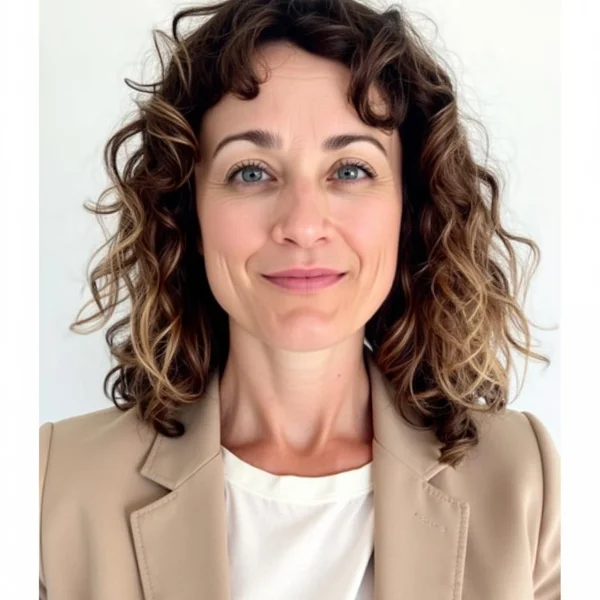
Marlena StanfordMSW
Co-Founder & Developer, Held Mom & Baby IOP, Marley Mental Health
What a Perinatal IOP Looks Like: A Conversation with Marley Mental Health
Marlena Stanford, MSW, co-founder of Marley Mental Health, on who benefits from intensive outpatient care, how babies and partners are woven into treatment, and what recovery looks like after PMADs derail daily life.
Many new and expectant parents expect that once they ask for help, weekly therapy will be enough. But for some, symptoms of depression, anxiety, OCD, birth trauma, or other perinatal mental health conditions become so overwhelming that they need a higher level of care without requiring hospitalization. That's where a perinatal IOP (Intensive Outpatient Program) can make a meaningful difference.
To help families better understand what a perinatal IOP is and when it may be the right fit, we spoke with Marlena Stanford, MSW, co-founder of Marley Mental Health and developer of the Held Mom & Baby IOP in Phoenix, Arizona. In this interview, Marlena shares what makes perinatal intensive outpatient care unique, who benefits most, and how specialized treatment can support lasting recovery for mothers and their families.
Who is the best candidate for a perinatal IOP program?
Marlena StanfordThe best candidate is a woman in the perinatal period, which we define as pregnancy through 12 months postpartum, who is experiencing a perinatal mood and anxiety disorder that requires more support than weekly outpatient therapy can provide, but does not need inpatient psychiatric care. This includes individuals experiencing depression, anxiety, OCD, birth trauma, and bipolar disorder, as well as those whose presentations don't fit neatly into a single diagnostic category.
How does healing in a group setting with other parents benefit a participant's recovery?
Marlena StanfordOne of the most powerful therapeutic forces in a group is the moment a client realizes she is not alone, that the thought or feeling or experience she has had trouble expressing because of shame or exhaustion is sitting across the room with someone else. The relational experience of the group is itself therapeutic: feeling heard, co-regulating with others, and experiencing repair after moments of disconnection all model exactly what clients are trying to build with their families at home.
Why is a specialized perinatal focus so critical, and what do general adult psychiatric programs typically miss?
Marlena StanfordA specialized perinatal program understands that a new mother's nervous system is responding to real hormonal, neurobiological, relational, and identity demands, and treats her accordingly rather than pathologizing her response. Perhaps most importantly, a specialized program knows how to hold the baby as part of the clinical picture, not as a logistical obstacle but as a therapeutic presence. This is not possible in a general adult psychiatric program.
One of the most powerful therapeutic forces in a group is the moment a client realizes she is not alone, that the thought or feeling or experience she has had trouble expressing because of shame or exhaustion is sitting across the room with someone else.
How do perinatal IOPs like yours involve partners, support systems, or the babies themselves in the treatment process?
Marlena StanfordBabies attend group with their mothers, and the here-and-now moments between mothers and babies, including attunement, disruption, repair, and play, are woven directly into clinical content as they arise. We also incorporate family sessions to address the relational and systemic dimensions of recovery, including partners, co-parents, or other loved ones. Support system mapping is built into the curriculum from the very first week, with explicit attention to the barriers that prevent clients from receiving the help that is already around them, including shame, stigma, the myth of self-reliance, and fear of being a burden.
What core therapeutic tools are most commonly used to give parents day-to-day relief?
Marlena StanfordOur approach includes acceptance and commitment therapy, which gives moms concrete tools for relating differently to difficult thoughts and emotions rather than being controlled by them, so they can keep moving toward what matters even on hard days. This is woven together with somatic and mindfulness-based practices that work directly with the nervous system, because no cognitive skill is useful when the body is in a threat state. We also draw on DBT distress tolerance skills, compassion-focused therapy for shame, and interpersonal psychotherapy for the relational strain that is almost universal during the perinatal period.
What does the typical "graduation" or step-down process look like when a parent is ready to transition out of intensive care?
Marlena StanfordWe frame the transition out of IOP as a shift into a different mode of ongoing practice, because recovery from PMADs is not linear and the skills built in the program need to be maintained over time. Each client leaves with a personalized written recovery plan that includes her top regulation tools, her concrete support network, her values compass, and her continuing care plan including individual therapy and psychiatric follow-up.
Is there anything else you would like to share about your program?
Marlena StanfordWhat makes this program distinct is that it holds two things at once that are rarely held together: rigorous, evidence-based clinical structure and genuine responsiveness to the messiness of real life with a baby. Sessions pause for babies or dysregulation and make room for grief, ambivalence, and the full range of emotions that this period brings, because meeting life as it is happening is the very heart of clinical work. We believe deeply that when a mother heals, her baby benefits, and that the work we do together in this room ripples outward into families in ways that are real and lasting.
About Marlena Stanford
Marlena Stanford is the co-founder of Marley Mental Health and developer of Held Mom & Baby IOP, a perinatal intensive outpatient program. The Held Mom & Baby IOP at Marley Mental Health provides support to pregnant and postpartum mothers in person in Phoenix, Arizona. The program includes small group therapy, individual therapy, family and couples therapy, and coordinated psychiatric care.
Ready to take the next step?
Our PMH-C certified therapists specialize in perinatal mental health and can typically see you within a week.
Not ready to book? Dr. Emily writes a short email series on Postpartum Depression, honest and practical, from a PMH-C therapist who's been through it herself.
No spam · Unsubscribe anytime