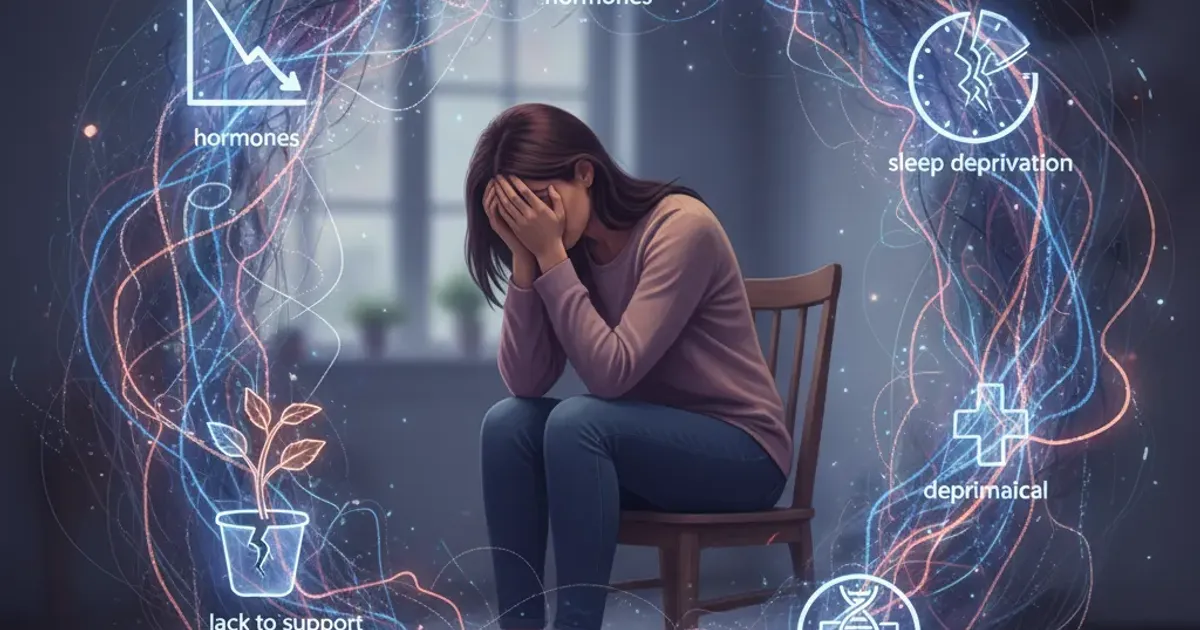
Can You Get PPD a Year After Giving Birth? Understanding Late-Onset Postpartum Depression
Written by
Phoenix Health Editorial Team
Expert health information, double-checked for accuracy and written to be helpful.
Last updated
The Myth of the "One-Year" Finish Line
There's a common misconception that the postpartum period—and the risk for postpartum depression—is confined to the first few weeks or months after birth. You might navigate the initial newborn chaos, get past the "baby blues" phase, and think you're in the clear. But then, at six, nine, or even twelve months postpartum, a familiar fog begins to roll in. You feel irritable, overwhelmed, sad, and nothing brings you joy. You might think, "This can't be postpartum depression. It's been too long."
Here is the truth: You can absolutely develop postpartum depression many months after your baby is born. This is known as late-onset , and it is a valid, recognized medical condition. Understanding that PPD doesn't follow a strict timeline is crucial for identifying the symptoms and getting the help you need, no matter when they appear.
When You Think You're in the Clear, But Symptoms Emerge
The experience of late-onset PPD can be particularly confusing. You may have felt fine, or at least functional, for a long time. The sudden or gradual appearance of depressive symptoms can make you feel like you're failing, especially when the initial "crisis" phase of infancy is over. You might feel ashamed, as if you have no "excuse" to be struggling now.
Defining Late-Onset Postpartum Depression
While most cases of PPD begin within the first three months after birth, the term "perinatal" technically extends through the entire first year postpartum. Therefore, any depressive episode that begins within that first year can be considered postpartum depression. The symptoms are the same; the only difference is the timing of their onset.
Why Does PPD Happen So Long After Birth?
The reasons for late-onset PPD are often tied to the slow accumulation of stress and major life transitions that happen later in the first year.
The Accumulation of Stress and Sleep Deprivation
For months, you've been running on adrenaline, surviving on broken sleep, and putting your own needs last. There may come a point where your body and mind simply cannot sustain that level of output anymore. Late-onset PPD can be the result of months of chronic, unaddressed stress and exhaustion finally reaching a breaking point. It's not a sudden failure; it's a slow depletion of your resources.
Major Life Transitions: Weaning and Returning to Work
Several major shifts that often occur in the latter half of the first year can act as powerful triggers for PPD.
- Weaning: The process of due to the significant hormonal shifts that occur as your milk supply regulates and your period returns.
- Returning to Work: The logistical and emotional stress of transitioning back to work—navigating childcare, pumping, and the "second shift" at home—can be an immense trigger for anxiety and depression.
- Changes in Sleep: As a baby's sleep patterns change (hello, sleep regressions), parents are often plunged back into severe sleep deprivation just when they thought things were getting better.
Underlying Conditions That Were Masked by a Crisis
Sometimes, an underlying depression or anxiety disorder was present all along but was masked by the adrenaline-fueled "survival mode" of the fourth trimester. As life settles into a more predictable (but still demanding) routine, the underlying mental health condition has more space to emerge.
Signs and Symptoms of Late-Onset PPD
The symptoms of late-onset PPD are identical to those that appear earlier. The challenge is recognizing them for what they are.
How They Overlap with "Regular" PPD
You may experience any of the classic PPD symptoms:
- Persistent sadness, hopelessness, or emptiness
- Irritability, anger, or rage
- Loss of interest in activities you used to enjoy
- Difficulty bonding with your baby
- Changes in appetite or sleep (beyond what's caused by the baby)
- Feelings of worthlessness or guilt
Why It Can Be Confused with Burnout or General Depression
Because so much time has passed since the birth, you or your doctor might misattribute your symptoms to general parental burnout or a standard major depressive episode. While there is overlap, understanding the "postpartum" context—the unique hormonal, social, and psychological pressures of motherhood—is key to getting the most effective treatment.
The Challenge of Diagnosis and Self-Doubt
One of the biggest hurdles with late-onset PPD is self-doubt.
"Is It Really 'Postpartum' Anymore?"
You might feel like a fraud for claiming the "postpartum" label after so many months. You might compare yourself to mothers who struggled in the beginning and think your experience isn't as valid. This can be a major barrier to seeking help.
Why the "Postpartum" Label Still Matters
The label matters because it connects your symptoms to the correct context. A therapist who specializes in perinatal mental health will understand the specific stressors—like weaning or the identity shift of motherhood—that are contributing to your depression. This leads to more targeted and effective care than a general approach might provide. No matter when it starts, understanding and that it's treatable is the most important thing.
Treatment Is Still Effective, No Matter When It Starts
The most important message is this: It is never too late to get help for PPD.
It's Never Too Late to Seek Help
The same effective treatments—therapy and/or medication—are available and work just as well whether your symptoms started at six weeks or six months. You have not missed a "window of opportunity" for healing. The best time to seek help is always right now.
Finding a Provider Who Understands Perinatal Mental Health
When you reach out for help, it can be useful to find a provider who has experience with perinatal mental health. They are less likely to dismiss your experience and more likely to understand the unique context of late-onset PPD.
You Are Not Alone in This Experience
While it may feel like you are the only one struggling so long after birth, late-onset PPD is a common experience.
Validating a Common but Rarely Discussed Journey
You are not an anomaly. You are part of a large group of parents whose mental health struggles didn't fit the textbook timeline. Your story is valid, and your struggle is real. Reaching out for help is a sign of strength and the first step toward feeling like yourself again, no matter how long it's been.
It's never too late to start the journey back to wellness. Schedule a free, confidential consultation with a Phoenix Health care coordinator to find a provider who understands.
Frequently Asked Questions
PPD that begins not immediately after birth but weeks or months later — sometimes as late as 6-12 months postpartum. It is less commonly discussed than early-onset PPD, which leads many people to dismiss their symptoms as unrelated to childbirth.
DSM-5 defines the perinatal specifier as beginning during pregnancy or within 4 weeks of delivery — but clinically, PPD presentations at 3, 6, even 9 months postpartum are well-recognized and treated as PPD. The postpartum period is not over at 6 weeks.
Weaning (which triggers hormonal shifts), return to work (which surfaces identity and loss), exhaustion compounding over months, or the lifting of survival-mode adrenaline that was masking symptoms. Many people are surprised when depression appears once the acute newborn period has passed.
Yes. The timing does not disqualify it. If you have persistent sadness, loss of interest, exhaustion disproportionate to sleep, anxiety, or disconnection — and you gave birth in the last year — PPD is a real possibility. Our article on late-onset postpartum depression explains the late presentation in detail.
No — the treatment is the same: therapy (CBT, IPT, EMDR for any birth trauma component), medication when indicated, and support system strengthening. The late timing may require more persuasion that this is real PPD, which is where a knowledgeable provider matters.
If symptoms are present most days, lasting more than two weeks, and affecting your ability to function — seek evaluation. You do not need to have struggled since day one to deserve care.
Ready to get support for Postpartum Depression?
Our PMH-C certified therapists specialize in Postpartum Depression and can typically see you within a week.