Dads and partners struggle too. That's worth talking about.
Therapists in Charleston, South Carolina
"Nobody asks how the dad is doing. But I'm struggling too."




 +17 more
No commitment. We'll confirm your coverage before your first session.
Virtual therapy for Charleston families
You moved to Charleston for the lifestyle, you've been here long enough to have a favorite coffee shop, and you have not been here long enough to have anyone you'd call at 2am. Postpartum depression and perinatal anxiety thrive in exactly that in-between, and a lot of Charleston families end up there. New parents across Mount Pleasant, North Charleston, James Island, West Ashley, and Daniel Island are dealing with rapid growth, rising costs, and the warm-but-slow process of building real community in a new place. Joint Base Charleston also means a substantial military spouse population dealing with deployments, PCS moves, and the specific isolation those bring. Phoenix Health therapists hold PMH-C certification, the specialty credential in perinatal mental health, and see Charleston clients entirely by secure video. We specialize in postpartum depression, perinatal anxiety, birth trauma, and pregnancy loss, and we're in-network with Aetna, BCBS Anthem, Cigna, Molina, and Tricare plans in South Carolina. Reaching out early is one of the highest-leverage choices you can make right now.
Charleston neighborhoods: Mount Pleasant · North Charleston · James Island · West Ashley · Daniel Island
You might benefit from therapy if…
- ✓You're irritable, snapping at your partner, or losing patience in ways that aren't you
- ✓You feel useless, in the way, or like you can't do anything right at home
- ✓You're working more, drinking more, or pulling away because home feels heavy
- ✓You're worried about your partner and trying to hold everything else together
- ✓You feel left out of the baby relationship and ashamed of feeling that way
- ✓Nobody has asked how you're doing in months

Dr. Emily Guarnotta
Psychologist & Founder
From our founder
Partners and dads get left out of perinatal mental health conversations constantly, and it costs families. I built Phoenix Health to include the whole household, because if you're the partner who is white-knuckling through this, you matter too, and the help available to you is real.
What therapy looks like
Our Paternal Mental Health specialists in Charleston, South Carolina
Most Phoenix Health therapists hold PMH-C certification — the gold standard in perinatal mental health.

Nadine Mejia
LCSW, PMH-C · Licensed therapist
A former Army Medic and a mother herself. She also supports Veterans and their families.
Licensed in CA, SC, FL
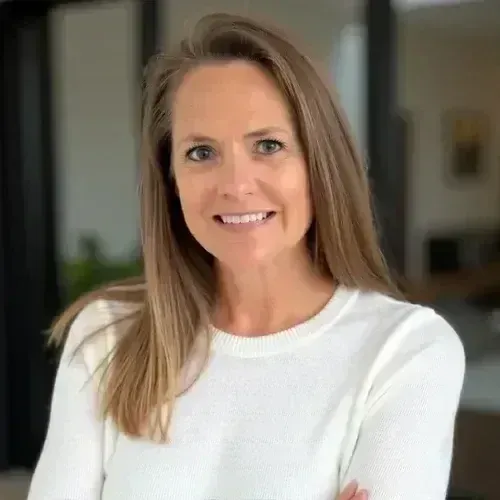
Jessica Rudzinski
LPC, LMHC, PMH-C · Licensed therapist
A postpartum depression survivor herself, with a decade supporting families in their own homes.
Licensed in SC, NY, FL
Stories that may sound familiar
These are examples, not client reviews. We don't publish our clients' words. What's said in therapy stays there.
“"I threw myself into being useful because that was the one thing I could control. I fixed things. I handled logistics. I was the one who held it together. And six months in, my wife noticed I hadn't laughed in weeks. My therapist helped me understand that caregiving without receiving care is its own kind of crisis. I didn't know I was allowed to need something."”
“Everyone was focused on my wife (which made sense, she'd just given birth). But I was drowning too and there was nowhere to put it. I couldn't tell anyone I wasn't okay because I was supposed to be the stable one. My therapist helped me see that my mental health wasn't separate from my family's wellbeing. It was directly connected.”
“I thought dads didn't get this. I was wrong. I was short-tempered, disconnected, going through the motions. I wasn't sleeping, but not because of the baby. I just couldn't. My wife saw it before I did. My therapist helped me understand it was depression, not weakness, and that getting help was the most present thing I could do for my family.”
“I had been working late on purpose for six months. I told myself I was supporting the family. My therapist helped me see I was avoiding home because I felt useless there. Once I addressed that, my relationship with both my wife and my son changed.”
Expert care.
Covered in South Carolina.
- ✓Aetna (incl. CVS Health, First Health, & Meritain)
- ✓BCBS (incl. Anthem, Blue Cross, Blue Shield, & state plans)
- ✓Cigna / Evernorth
- ✓United Healthcare (UHC) / Optum (incl. UBH, UMR, Surest, Oscar, & Oxford)
- ✓Molina Healthcare
- ✓Tricare (East, Prime, Select)
Most clients pay less than $20 per session.
Accepted Insurance Networks




Ready to start Paternal Mental Health therapy? Here’s how it works.
The whole process takes about 5 minutes. We handle insurance — you just show up.
- 1
Book your free call
A quick 15-minute chat to hear what you're going through, answer your questions, and make sure we're a great fit for your needs. No cost, no commitment.
- 2
Get matched
We'll pair you with the right specialist for your specific situation. We'll also check your insurance, so you know your exact cost per session before moving forward.
- 3
Start your first session
Meet your therapist from the comfort of home. No commute, no waiting rooms, no judgment. Most clients notice a real difference within just 2 to 3 sessions.
No commitment · Most insurance accepted · Available this week
Common questions
- Yes. Roughly 1 in 10 fathers and non-birthing partners experience perinatal depression or anxiety. It often presents as irritability, withdrawal, or anger rather than the classic sadness, which is part of why it gets missed.
- Both of you matter, and the research is clear that when one partner is struggling, the other's well-being directly affects family outcomes. Getting your own support is not taking away from her. It's adding to the resources the family has.
- It's common, especially in the early months when the birthing parent often has more of the physiological bond. Disconnection often improves with intentional time together, less competition with your partner over caregiving, and sometimes therapy to address what's underneath the disconnection.
- Therapy is confidential. You decide what to share and when. Many partners eventually choose to share what they're working on, which can deepen the relationship, but that's your call.
- Yes. Phoenix Health provides telehealth therapy to residents of South Carolina. Sessions are conducted via secure video from your home, office, or anywhere private — no commute required. All Phoenix Health therapists are licensed and authorized to practice in South Carolina.
- PMH-C (Perinatal Mental Health Certification) is awarded by Postpartum Support International (PSI) to clinicians who have completed advanced training in perinatal mental health — covering postpartum depression, anxiety, OCD, birth trauma, and related conditions. It represents the gold standard of specialization in this field.
- If you're struggling — with your mood, your thoughts, your relationship, or just how you're coping — that's enough of a reason to talk to someone. You don't need a diagnosis. A free consultation is a low-commitment first step.
From the Phoenix Health resource center
Articles and guides about paternal mental health
Trusted by leading voices in parenting and mental health
OBs, doulas, and pediatricians refer their patients to us because we specialize in maternal mental health.






The sooner you start,
the sooner you'll
feel like yourself again.
You've been surviving. It's time to start healing.
No commitment · Covered by insurance · Available this week
Learning resources
👨👶Read our Paternal Mental Health guides →Often goes alongside