Becoming parents changes everything — including each other.
Therapists in Miami, Florida
"We used to be close. Now we're just coparenting strangers."




 +13 more
No commitment. We'll confirm your coverage before your first session.
Virtual therapy for Miami families
You're supposed to be glowing. You're in the most photogenic city in America, you have a beautiful baby, and you cannot understand why you wake up every morning with your heart pounding. Postpartum anxiety in Miami often hides behind a cultural insistence on appearing well, especially for Latina and first-generation parents who were raised to keep things in the family. Across Brickell, Wynwood, Coral Gables, Little Havana, South Beach, and Hialeah, parents are dealing with the realities of South Florida life: expensive housing, long commutes, family who may live abroad, and an unspoken pressure to be the strong one. Postpartum depression, birth trauma, and perinatal anxiety do not respect the curated version of your life on Instagram. Phoenix Health offers therapy in Spanish and English to families across Miami-Dade and Broward, with PMH-C certified clinicians who specialize in perinatal mental health and understand the specific cultural context Miami parents bring. Because sessions are entirely virtual, there is no Palmetto traffic, no Brickell parking, no extra logistics on a day that already has too many. Asking for help does not mean something is wrong with you. It means you're paying attention.
Miami neighborhoods: Brickell · Wynwood · Coral Gables · Little Havana · South Beach · Hialeah
You might benefit from therapy if…
- ✓You've gone from partners to coparents and you don't know how to get back to each other
- ✓You're fighting about the same things over and over: chores, sleep, time, attention
- ✓You feel invisible to your partner, or like they're invisible to you
- ✓You've lost intimacy and you're not sure how to talk about it
- ✓You're resentful in ways that scare you a little
- ✓One or both of you is depressed or anxious and it's spilling into the relationship

Dr. Emily Guarnotta
Psychologist & Founder
From our founder
Almost every couple I see in the postpartum phase tells me some version of the same story: we used to be close, and now we feel like roommates. That's not a verdict on your relationship. It's a description of what this phase does. The couples who do the work usually come out closer than they were before, and that's why I love this part of the practice.
What therapy looks like
Our Relationships & Couples specialists in Miami, Florida
Most Phoenix Health therapists hold PMH-C certification — the gold standard in perinatal mental health.

Nadine Mejia
LCSW, PMH-C · Licensed therapist
A former Army Medic and a mother herself. She also supports Veterans and their families.
Licensed in CA, SC, FL
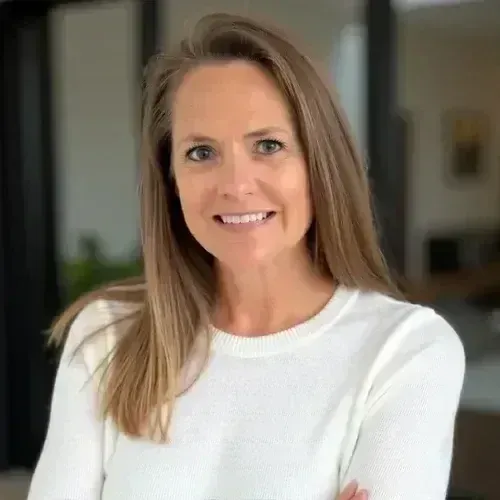
Jessica Rudzinski
LPC, LMHC, PMH-C · Licensed therapist
A postpartum depression survivor herself, with a decade supporting families in their own homes.
Licensed in SC, NY, FL

Sailys Concepcion
EspañolLMHC, LPC, LPCC, PMH-C · Licensed therapist
Born in Cuba, raised in the U.S. She works on the role changes and identity shifts of new parenthood.
Licensed in CA, LA, WA, AZ, GA, FL
Stories that may sound familiar
These are examples, not client reviews. We don't publish our clients' words. What's said in therapy stays there.
“"After our daughter arrived, neither of us knew how to talk about what had changed between us without it becoming a fight. Our therapist helped us understand that connection after a baby looks completely different, and that waiting for things to go back to how they were wasn't going to work. We had to build something new."”
“"Nobody told me the baby would bring up every unresolved thing in our relationship at once. Old fights I thought we were past. Patterns from our own families. Who I thought my partner would be as a parent versus who he actually was. Our couples therapist helped us figure out what we were actually arguing about instead of just circling the same argument."”
“"We went from a team to two separate people managing a crisis in the same house. I was keeping score without realizing it. She was exhausted in ways I couldn't see. Working with a therapist together helped us stop talking past each other and start talking to each other again. We're not the same couple we were before. We're better."”
“We were having the same fight every Sunday night for six months. Once we started couples work I realized we were both saying the same thing in different words. We needed someone to translate. It changed everything.”
Expert care.
Covered in Florida.
- ✓Aetna (incl. CVS Health, First Health, & Meritain)
- ✓BCBS (incl. Anthem, Blue Cross, Blue Shield, & state plans)
- ✓Cigna / Evernorth
- ✓United Healthcare (UHC) / Optum (incl. UBH, UMR, Surest, Oscar, & Oxford)
Most clients pay less than $20 per session.
Accepted Insurance Networks




Ready to start Relationships & Couples therapy? Here’s how it works.
The whole process takes about 5 minutes. We handle insurance — you just show up.
- 1
Book your free call
A quick 15-minute chat to hear what you're going through, answer your questions, and make sure we're a great fit for your needs. No cost, no commitment.
- 2
Get matched
We'll pair you with the right specialist for your specific situation. We'll also check your insurance, so you know your exact cost per session before moving forward.
- 3
Start your first session
Meet your therapist from the comfort of home. No commute, no waiting rooms, no judgment. Most clients notice a real difference within just 2 to 3 sessions.
No commitment · Most insurance accepted · Available this week
Common questions
- It is extremely common, and that doesn't mean it's healthy to leave it alone. Most couples see a real dip in relationship satisfaction in the first year postpartum. Couples who get support tend to recover faster and more thoroughly than couples who try to wait it out.
- Individual therapy can still make a meaningful difference. Often when one partner starts doing their own work, the dynamic shifts enough that the other becomes more open. And many things that feel like couple problems are actually individual stress that's spilling over.
- Often both. For most couples in this phase, individual therapy for the partner who's struggling most (or both partners) alongside couples work is the most effective combination. Your therapist can help you decide what makes sense.
- Intimacy after a baby is its own area of work, and it usually doesn't fix itself. Many couples find that the emotional repair has to happen first, and then physical intimacy follows. Talking about it explicitly with a therapist makes it much more likely to come back.
- Yes. Phoenix Health provides telehealth therapy to residents of Florida. Sessions are conducted via secure video from your home, office, or anywhere private — no commute required. All Phoenix Health therapists are licensed and authorized to practice in Florida.
- PMH-C (Perinatal Mental Health Certification) is awarded by Postpartum Support International (PSI) to clinicians who have completed advanced training in perinatal mental health — covering postpartum depression, anxiety, OCD, birth trauma, and related conditions. It represents the gold standard of specialization in this field.
- If you're struggling — with your mood, your thoughts, your relationship, or just how you're coping — that's enough of a reason to talk to someone. You don't need a diagnosis. A free consultation is a low-commitment first step.
From the Phoenix Health resource center
Articles and guides about relationships & couples
Trusted by leading voices in parenting and mental health
OBs, doulas, and pediatricians refer their patients to us because we specialize in maternal mental health.






The sooner you start,
the sooner you'll
feel like yourself again.
You've been surviving. It's time to start healing.
No commitment · Covered by insurance · Available this week
Learning resources
💑Read our Relationships & Couples guides →Often goes alongside