You shouldn't have to do this alone. Community makes a difference.
Therapists in New York
"Everyone told me I'd have a village. I've never felt more alone."



 +19 more
No commitment. We'll confirm your coverage before your first session.
You might benefit from therapy if…
- ✓You're isolated despite being surrounded by people, and you can't put your finger on why
- ✓Your friendships have changed and you're not sure how to rebuild them
- ✓You don't have family nearby, or the family you have isn't the support you need
- ✓You're hesitant to ask for help and you can feel yourself running on empty
- ✓You compare yourself to people whose village looks great on social media
- ✓You want to build community but you don't know where to start

Dr. Emily Guarnotta
Psychologist & Founder
From our founder
Loneliness in new parenthood is one of the most clinical issues I treat that doesn't get called clinical. The village is mostly gone in modern American life, and rebuilding any version of it takes intention. I tell my clients that you don't need a crowd. You need a few real people. That's achievable, and the work is worth it.
What therapy looks like
Our Support & Community specialists in New York
Most Phoenix Health therapists hold PMH-C certification — the gold standard in perinatal mental health.
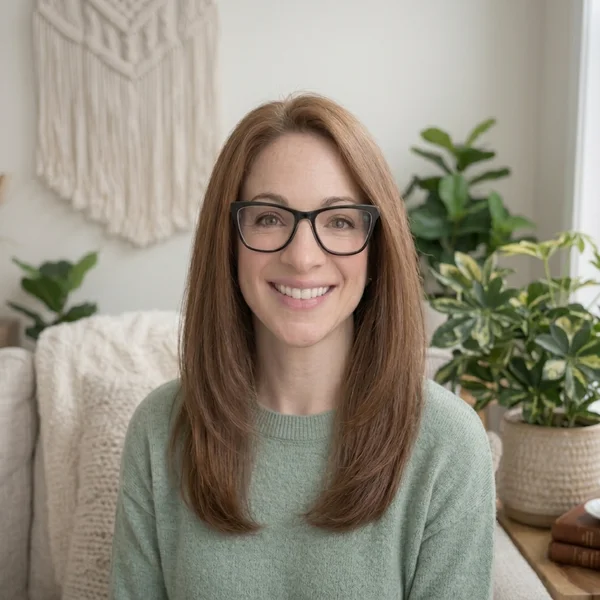
Lyndsay Ward
LCSW, PMH-C · Licensed therapist
An attachment theory expert who helps you unpack how your childhood shows up in your parenting.
Licensed in NY

Golda Fleischman
LMSW · Licensed therapist
A birth doula before she was a therapist, she helps you prepare for a birth or process a hard one.
Licensed in NY
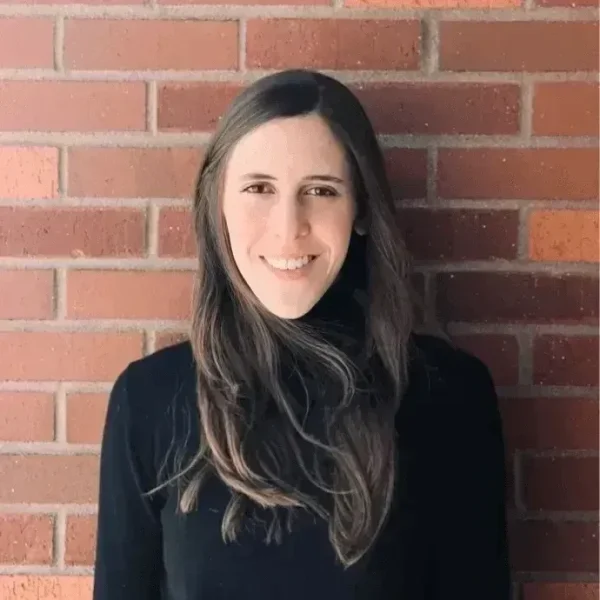
Alana Vicentini
EspañolLMHC, PMH-C · Licensed therapist
"There is hope, no matter how much you are struggling." EMDR-trained, in English or Spanish.
Licensed in NY

Deborah Edelson
LCSW, PMH-C · Licensed therapist
30+ years in practice, and still no one-size-fits-all: "You are the expert on your own life."
Licensed in NY
Support & Community in New York — browse by city
Stories that may sound familiar
These are examples, not client reviews. We don't publish our clients' words. What's said in therapy stays there.
“"I had a big group of friends before my baby and somehow felt more alone than ever. Nobody wanted to hear the hard parts. Everyone wanted the cute photos. I felt like I was performing happy new mom for everyone in my life and dying inside. My therapist was the first person who asked how I actually was and waited for the real answer."”
“"All my friends from before had kids who were three and four years older than mine. They'd moved past the stage I was in. My family was far away. My husband was supportive but couldn't give me what I needed from another mother. My therapist helped me stop waiting for community to appear and start building it intentionally."”
“"I didn't know how to make mom friends as an adult and I was too tired to try. I sat alone at the playground while other women seemed to effortlessly know each other. The loneliness was worse than the exhaustion. My therapist helped me understand that isolation is a symptom, not a character flaw, and helped me figure out what I actually needed to feel less alone."”
“I felt like everyone else had a village and I had been left out. My therapist helped me see I had been quietly cutting people off because asking for help felt impossible. We worked on that for months. I have friends now who actually show up.”
Expert care.
Covered in New York.
- ✓Aetna (incl. CVS Health, First Health, & Meritain)
- ✓BCBS (incl. Anthem, Blue Cross, Blue Shield, & state plans)
- ✓Cigna / Evernorth
- ✓United Healthcare (UHC) / Optum (incl. UBH, UMR, Surest, Oscar, & Oxford)
- ✓EmblemHealth (GHI)
- ✓Fidelis Care / Ambetter (including Medicaid)
- ✓Northwell Direct
- ✓Empire NYSHIP (New York State Health Insurance Program)
Most clients pay less than $20 per session.
Accepted Insurance Networks





Mental health parity in New York
New York has some of the strongest mental health parity protections in the country. The New York State Mental Health and Substance Use Disorder Parity Law (and Timothy's Law for employer plans) prohibits insurers from imposing visit limits on mental health services and requires coverage at parity with medical care. The PARITY Act further strengthened enforcement. New York insurers cannot require prior authorization for initial mental health visits, cannot limit sessions to a fixed annual number, and cannot charge higher copays for mental health than for comparable medical specialist visits. File complaints with the New York Department of Financial Services.
Crisis support: New York State Hopeline — 1-800-HOPENY (467-3691)
Ready to start Support & Community therapy? Here’s how it works.
The whole process takes about 5 minutes. We handle insurance — you just show up.
- 1
Book your free call
A quick 15-minute chat to hear what you're going through, answer your questions, and make sure we're a great fit for your needs. No cost, no commitment.
- 2
Get matched
We'll pair you with the right specialist for your specific situation. We'll also check your insurance, so you know your exact cost per session before moving forward.
- 3
Start your first session
Meet your therapist from the comfort of home. No commute, no waiting rooms, no judgment. Most clients notice a real difference within just 2 to 3 sessions.
No commitment · Most insurance accepted · Available this week
Common questions
- Yes, and it's also worth treating. The modern parenting context is genuinely isolating, and loneliness is a real risk factor for postpartum depression. Treating it as a clinical issue rather than a personality flaw tends to change how it gets addressed.
- You don't have to do it the extroverted way. One or two real, sustained connections tend to do more for mental health than a large but shallow network. Your therapist can help you build the kind of support that matches your nervous system.
- This is one of the most common reasons people come in. Having unhelpful or harmful family around can be lonelier than having no family at all. Therapy can help you set the kind of limits that protect you and figure out how to build other sources of support.
- No. Not every group is a good fit, and some groups have a tone or norms that don't work for everyone. Finding the right community usually involves several attempts. Your therapist can help you figure out what kind of group is likely to actually work.
- Yes. Phoenix Health provides telehealth therapy to residents of New York. Sessions are conducted via secure video from your home, office, or anywhere private — no commute required. All Phoenix Health therapists are licensed and authorized to practice in New York.
- PMH-C (Perinatal Mental Health Certification) is awarded by Postpartum Support International (PSI) to clinicians who have completed advanced training in perinatal mental health — covering postpartum depression, anxiety, OCD, birth trauma, and related conditions. It represents the gold standard of specialization in this field.
- If you're struggling — with your mood, your thoughts, your relationship, or just how you're coping — that's enough of a reason to talk to someone. You don't need a diagnosis. A free consultation is a low-commitment first step.
From the Phoenix Health resource center
Articles and guides about support & community
Trusted by leading voices in parenting and mental health
OBs, doulas, and pediatricians refer their patients to us because we specialize in maternal mental health.






The sooner you start,
the sooner you'll
feel like yourself again.
You've been surviving. It's time to start healing.
No commitment · Covered by insurance · Available this week
Learning resources
🤝Read our Support & Community guides →Often goes alongside