Questions? Call or text anytime ๐Ÿ“ž 818-446-9627
For PSI Chapters

A clinical home for your warmline referrals

Phoenix Health is built by PMH-C clinicians and aligned with PSI standards. Send families to care that matches the mission.

45 states

covered by PMH-C therapists at Phoenix

Phoenix Health

What families and providers say about Phoenix Health

Based on verified Google reviews

Verified reviews from providers and colleagues

Lindsey Lotito

Perinatal Provider

โ€œDr. Emily Guarnotta is so welcoming, kind, and caring. She shows so much compassion in this field. Her approach is very honest, and with her personal perspective helping give the ultimate care you would need โ€” you are in wonderful hands. I highly recommend Phoenix Health.โ€
2024

Jennifer Senn

Perinatal Provider

โ€œDr. Guarnotta and her team are among the most knowledgeable and compassionate providers I've encountered in the field of pregnancy and infant loss. Their expertise and care make them an invaluable resource for any mom struggling during the perinatal period.โ€
2024

Lauren Richardson

Psychologist

โ€œDr. Guarnotta is a highly skilled psychologist โ€” compassionate, intentional, and highly skilled. She and her team are at the top of my referral list for perinatal mental health services.โ€
2025

Kristen Criscitelli

Provider

โ€œDr. Emily Guarnotta has been so helpful and such a valuable resource to several of my clients. She has taken the time to speak with them and has helped get them the mental health support that they need. I am so grateful to have her as a trusted resource!โ€
2025

Manny Romero

Colleague

โ€œEmily brings a wealth of knowledge, deep compassion, and genuine care to the individuals and families she supports. Her expertise in guiding new and expectant mothers through the emotional and psychological challenges of parenthood is truly invaluable.โ€
2024

Paige Figueroa

Maternal Health Advocate

โ€œPhoenix Health provides unmatched support for those struggling with challenges due to infertility and pregnancy all the way through postpartum and early motherhood. They truly provide unmatched care โ€” and as someone who works with moms professionally, I recommend them without hesitation.โ€
2024

Resources for PSI Chapters

A quiet interior scene โ€” soft light, a plant, a chair, a sense of calm presence, representing the themes of "Reducing PMAD Stigma in Underserved Communities".

Reducing PMAD Stigma in Underserved Communities

PMAD identification and treatment rates are significantly lower in communities of color, immigrant communities, and low-income populations. A guide for community organizations on understanding the barriers, using culturally responsive approaches, and building trust-based pathways to care.

Read article โ†’
A quiet interior scene โ€” soft light, a plant, a chair, a sense of calm presence, representing the themes of "Faith Community Guide to Perinatal Mental Health Support".

Faith Community Guide to Perinatal Mental Health Support

Faith communities are trusted institutions with sustained relationships with families during the perinatal period. A practical guide for pastors, lay leaders, and faith-based social service programs on supporting congregants through PMADs within appropriate pastoral scope.

Read article โ†’
A figure seated on a window seat, looking out at a grey sky, a soft blanket nearby, representing the themes of "Pregnancy and Infant Loss: Community Support and Referral Resources".

Pregnancy and Infant Loss: Community Support and Referral Resources

Pregnancy loss, stillbirth, and infant death are distinct grief experiences that require specialized community support. A guide for community organizations, peer support leaders, and bereavement programs on how to support bereaved families and connect them to clinical resources.

Read article โ†’
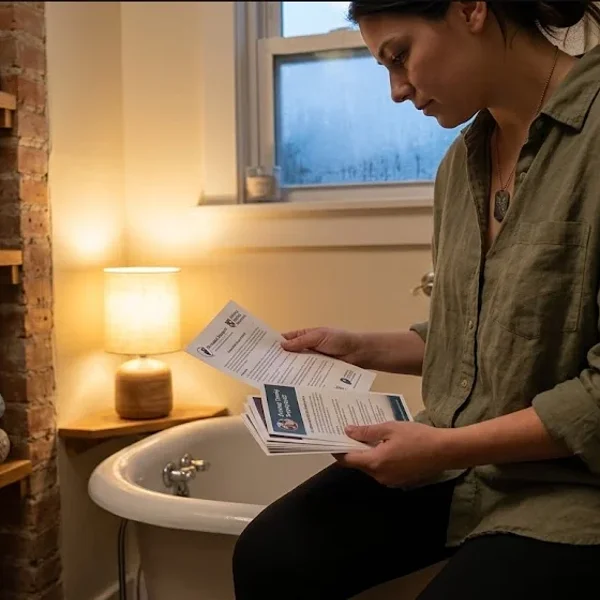
A person sitting in a warm, peaceful room with soft natural light, a sense of calm reflection, representing the themes of "Building Perinatal Mental Health Awareness in Your Community".

Building Perinatal Mental Health Awareness in Your Community

A complete guide for community organizations, PSI chapters, home visiting programs, and community health workers on building grassroots perinatal mental health awareness, from support group infrastructure to stigma reduction campaigns to referral network development.

Read article โ†’
A figure near a window in a quiet domestic interior, unhurried and still, representing the themes of "Community Health Worker Training for PMAD Identification and Referral".

Community Health Worker Training for PMAD Identification and Referral

Community health workers are frontline connectors for high-risk families who may not access clinical care. A practical training guide covering PMAD recognition, scope-appropriate support, referral language, and follow-up for CHWs working in home visiting, WIC, and community health settings.

Read article โ†’
A person sitting in a warm, peaceful room with soft natural light, a sense of calm reflection, representing the themes of "How to Start a Perinatal Mental Health Support Group".

How to Start a Perinatal Mental Health Support Group

Peer support groups for postpartum depression and anxiety are among the most effective community mental health resources. A practical guide for community organizations, PSI chapter leaders, and lay facilitators on starting and sustaining a perinatal mental health support group.

Read article โ†’
A person sitting in a warm, peaceful room with soft natural light, a sense of calm reflection, representing the themes of "Perinatal Mental Health Resources for Military Families".

Perinatal Mental Health Resources for Military Families

Military families face unique perinatal mental health challenges: deployment, relocation, provider access on and off-base, and the specific stressors of military life. A resource guide for community organizations and support programs serving military families.

Read article โ†’
A non-binary person sitting in a garden, calm and self-assured, dappled light, representing the themes of "Supporting LGBTQ+ Parents Through Perinatal Mental Health Challenges".

Supporting LGBTQ+ Parents Through Perinatal Mental Health Challenges

LGBTQ+ parents face specific perinatal mental health risk factors, including minority stress, fertility treatment burden, inadequate representation in perinatal care, and unique family dynamics. A guide for community organizations on affirmative support and effective referral.

Read article โ†’
A person sitting in a warm, peaceful room with soft natural light, a sense of calm reflection, representing the themes of "Home Visiting and PMAD Identification: A Field Guide".

Home Visiting and PMAD Identification: A Field Guide

Home visitors see what clinicians in offices never do. This field guide covers PMAD risk signals, documentation, scope of practice, and referral language for resistant clients.

Read article โ†’

Refer in 3 steps

1

Identify warmline or support group participants who need ongoing individual therapy with a PMH-C specialist.

2

Send the family our self-referral link or submit a partner referral on their behalf.

3

Phoenix Health follows up within 48 hours, verifies insurance, matches a PMH-C therapist, and keeps you in the loop.

Ready to become a referral partner?

Phoenix Health supports every type of perinatal provider. We handle insurance verification, follow-up, and coordination so you can stay focused on your patients.