Your birth experience matters. So does what you're carrying.
Therapists in Dallas, Texas
"My birth experience left me shaken. I can't stop replaying it."
An estimated 1 in 3 women describe their birth experience as traumatic.



 +14 more
No commitment. We'll confirm your coverage before your first session.
Virtual therapy for Dallas families
You're doing the morning drop-off, driving forty minutes each way on 35, back at your desk by nine, and still somehow behind on everything. DFW is a city that rewards ambition and does not make room for the parent who is not handling it. Postpartum depression and perinatal anxiety do not care about your five-year plan. In the suburbs where Dallas families actually live — Plano, Frisco, McKinney, Irving, Arlington, Garland — the houses are newer, the school districts are excellent, and the implicit expectation is that capable people figure things out. They show up anyway: the 4am worry that won't stop, the detachment you can't explain, the crying that doesn't fit anything on the outside of your life. Dallas has a broad mental health infrastructure, but perinatal specialists — therapists trained specifically for the year before and after having a baby — are harder to find than a general therapist, and in-network wait lists often run six to eight weeks. Phoenix Health therapists hold PMH-C certification and typically see Dallas-area clients within one week of intake, by secure video from wherever you have a private fifteen minutes. No DFW commute required. We verify your insurance benefits before your first session.
Dallas neighborhoods: Plano · Frisco · Arlington · Irving · McKinney · Garland
You might benefit from therapy if…
- ✓You replay parts of the birth over and over, or specific moments come back uninvited
- ✓You avoid hospitals, your OB's office, certain smells or sounds, or talking about the birth at all
- ✓You feel detached from your baby, your body, or yourself in ways you didn't before
- ✓You feel rage at the people who were in the room, the providers who made decisions, or your own body for not doing what it was supposed to do
- ✓You can't imagine having another baby, or you're terrified of the idea
- ✓People keep telling you to focus on the healthy baby, and it makes you want to disappear

Dr. Emily Guarnotta
Psychologist & Founder
From our founder
When clients tell me their birth story, I never start by reassuring them their baby is healthy. They know that. What they need first is for someone to take what they went through seriously. Birth trauma is real, and the body remembers it even when the family album moves on. Healing the trauma is possible, and so is wanting more children after.
What therapy looks like
Our Birth Trauma specialists in Dallas, Texas
Most Phoenix Health therapists hold PMH-C certification — the gold standard in perinatal mental health.

Amanda Flowers
LPC, PMH-C · Licensed therapist
Works with perinatal OCD and neurodivergence, using body-based tools to calm the nervous system.
Licensed in TX, MT
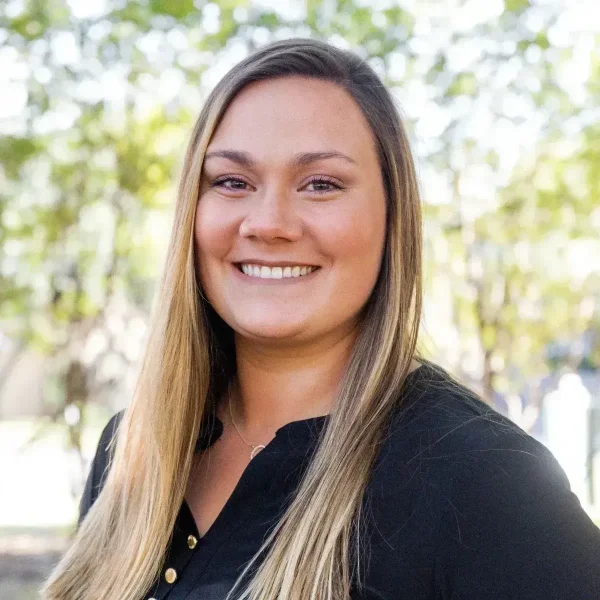
Ashlyn Parides
PHD, PMH-C · Psychologist
Direct and active. She'll help you start with one small change you can keep, not a whole-life overhaul.
PsyPact provider — 40+ states
Stories that may sound familiar
These are examples, not client reviews. We don't publish our clients' words. What's said in therapy stays there.
“"My emergency C-section left me with nightmares and panic attacks. I couldn't talk about the birth without shaking. Therapy helped me process the trauma and reclaim my story. I'm pregnant again now, and I actually feel ready."”
“Everyone kept saying at least the baby is healthy. I know they meant well. But I still had to live inside a body that went through something traumatic, and nobody seemed to think that mattered. My therapist was the first person who acknowledged both things could be true at once: that I could be grateful and also need to heal.”
“My labor lasted 38 hours and ended in an emergency I wasn't prepared for. I couldn't tell the story without reliving it. My therapist used EMDR and something shifted. I could finally talk about what happened without leaving my body. I didn't know that was possible. I tell every pregnant person I know about perinatal therapy now.”
“I avoided my OB's office for over a year. The first time I drove past the hospital without my stomach dropping, I cried in the car. EMDR sounded strange to me when she first described it. I am so glad I trusted the process.”
Expert care.
Covered in Texas.
- ✓Aetna (incl. CVS Health, First Health, & Meritain)
- ✓BCBS (incl. Anthem, Blue Cross, Blue Shield, & state plans)
- ✓Cigna / Evernorth
- ✓United Healthcare (UHC) / Optum (incl. UBH, UMR, Surest, Oscar, & Oxford)
Most clients pay less than $20 per session.
Accepted Insurance Networks
Ready to start Birth Trauma therapy? Here’s how it works.
The whole process takes about 5 minutes. We handle insurance — you just show up.
- 1
Book your free call
A quick 15-minute chat to hear what you're going through, answer your questions, and make sure we're a great fit for your needs. No cost, no commitment.
- 2
Get matched
We'll pair you with the right specialist for your specific situation. We'll also check your insurance, so you know your exact cost per session before moving forward.
- 3
Start your first session
Meet your therapist from the comfort of home. No commute, no waiting rooms, no judgment. Most clients notice a real difference within just 2 to 3 sessions.
No commitment · Most insurance accepted · Available this week
Common questions
- Birth trauma is defined by how an event felt to you — not whether it looked 'bad' from the outside. Unexpected complications, feeling out of control, not being heard by providers, emergency procedures, or simply an experience that didn't match what you expected can all be traumatic.
- Yes. Trauma-focused therapies like EMDR (Eye Movement Desensitization and Reprocessing) and trauma-informed CBT are effective for birth trauma. Phoenix Health therapists are trained in perinatal trauma and can work with you at a pace that feels safe.
- Yes. Trauma is about how the event was experienced, not how it looks on paper. If you felt unheard, out of control, frightened for yourself or your baby, or violated in any way, your nervous system can encode that as traumatic. You don't need to justify your reaction to anyone, including yourself.
- Not necessarily. EMDR and other modern trauma treatments don't require you to repeatedly narrate the event. Your therapist will pace the work and use approaches that let you process without re-traumatizing yourself.
- Not exactly. Birth trauma is the broader term. Postpartum PTSD is a specific clinical diagnosis when symptoms reach a certain threshold, including intrusive memories, avoidance, hyperarousal, and negative shifts in mood. Many people have significant birth trauma without meeting full PTSD criteria, and they still benefit from trauma-informed therapy.
- Yes, and this is one of the most rewarding pieces of work. Treating birth trauma before a next pregnancy can dramatically change how you experience the next birth. Many clients come in specifically to prepare, and it makes a real difference.
- Yes. Phoenix Health provides telehealth therapy to residents of Texas. Sessions are conducted via secure video from your home, office, or anywhere private — no commute required. All Phoenix Health therapists are licensed and authorized to practice in Texas.
From the Phoenix Health resource center
Articles and guides about birth trauma
Trusted by leading voices in parenting and mental health
OBs, doulas, and pediatricians refer their patients to us because we specialize in maternal mental health.






The sooner you start,
the sooner you'll
feel like yourself again.
You've been surviving. It's time to start healing.
No commitment · Covered by insurance · Available this week
Learning resources
💔Read our Birth Trauma guides →Often goes alongside