Your mind won't stop. And you're exhausted from it.
Therapists in Fort Worth, Texas
"I can't relax. I'm constantly waiting for something to go wrong."
Postpartum anxiety affects roughly 15–20% of new mothers, yet is often under-diagnosed.



 +14 more
No commitment. We'll confirm your coverage before your first session.
Virtual therapy for Fort Worth families
Fort Worth is not Dallas. People here are specific about that. The city has its own economy, its own identity, and its own version of the Texas postpartum experience that gets flattened when it gets lumped into DFW the way most national health resources lump it. The growth in Near Southside, Keller, Southlake, Mansfield, and Burleson has brought a wave of young families and professionals who moved here for the housing costs and the schools, and who are far from their own families without necessarily having set out to be. Fort Worth has strong roots in faith communities, Western culture, and the kind of toughness that doesn't put private struggles into public conversation. That cultural layer makes it genuinely harder to say you're struggling, and harder to ask for help. PMH-C certified perinatal mental health specialists are scarce in Fort Worth proper. Most practices funnel to the Dallas side of the Metroplex, which means an additional commute on I-30 or 820 that isn't nothing when you have a newborn. Phoenix Health therapists hold PMH-C certification and typically see Fort Worth-area clients within one week of intake, by secure video from wherever you have a quiet fifteen minutes. No Trinity River traffic. No I-30. We accept most major insurance plans, including Aetna, Blue Cross Blue Shield, Cigna, and United Healthcare, and verify your benefits before your first session.
Fort Worth neighborhoods: Near Southside · Sundance Square · Keller · Southlake · Mansfield · Burleson
You might benefit from therapy if…
- ✓Your mind won't stop running through worst-case scenarios, especially about the baby
- ✓You're exhausted but lying awake checking the baby monitor, or you can't fall asleep even when you have the chance
- ✓You feel physical symptoms — racing heart, tight chest, nausea, jaw clenching — that don't match what's actually happening
- ✓You can't hand the baby to anyone else without feeling panicked
- ✓You're researching dangers, illnesses, or rare risks late at night and can't stop
- ✓People keep telling you to relax and it makes you want to scream

Dr. Emily Guarnotta
Psychologist & Founder
From our founder
Anxiety in the postpartum period gets dismissed all the time. People hear that you're worried about the baby and they nod and say of course you are. But there's a difference between healthy concern and a mind that won't stop. I tell my clients that anxiety this loud is a signal, not a personality trait, and it does quiet down with the right work.
What therapy looks like
Our Postpartum Anxiety specialists in Fort Worth, Texas
Most Phoenix Health therapists hold PMH-C certification — the gold standard in perinatal mental health.

Amanda Flowers
LPC, PMH-C · Licensed therapist
Works with perinatal OCD and neurodivergence, using body-based tools to calm the nervous system.
Licensed in TX, MT
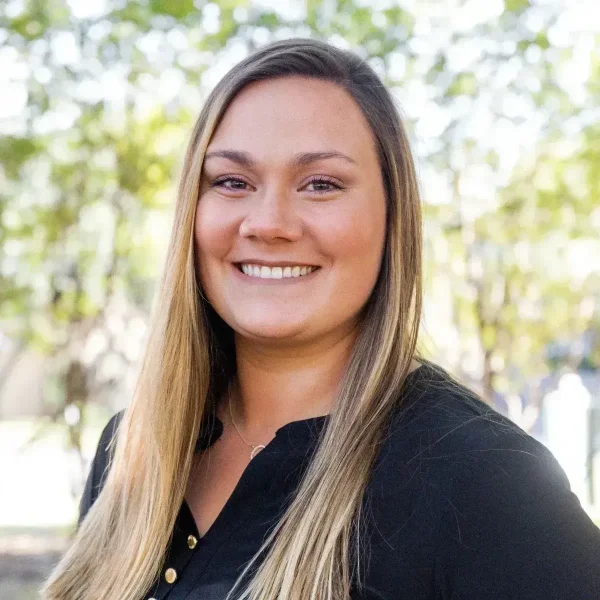
Ashlyn Parides
PHD, PMH-C · Psychologist
Direct and active. She'll help you start with one small change you can keep, not a whole-life overhaul.
PsyPact provider — 40+ states
Stories that may sound familiar
These are examples, not client reviews. We don't publish our clients' words. What's said in therapy stays there.
“"I was fine on paper but my jaw was clenched from morning to bedtime and I didn't notice until my dentist asked if I was grinding my teeth. My therapist helped me understand my body had been in alarm mode for months. Learning to come down from that took time, but I finally knew what I was dealing with."”
“The anxiety didn't look like crying. It looked like researching every possible thing that could go wrong, canceling plans because I couldn't manage the variables, and snapping at my partner because I was running on adrenaline 24 hours a day. My therapist helped me name it and interrupt it. I feel like I got my brain back.”
“I couldn't put my son down without panicking. I'd check that he was breathing every few minutes through the night. My husband thought I was being a good mom. I knew something was wrong. My therapist helped me see the difference between vigilance and anxiety, and gave me tools to quiet the spiral. I sleep now. That alone changed everything.”
“I was so vigilant I couldn't sit on the couch. I'd check the monitor every two minutes and still feel like I was failing. My therapist helped me see that my brain was stuck in a pattern, not telling me the truth. The shaking in my hands stopped first. Then the 3 a.m. spirals.”
Expert care.
Covered in Texas.
- ✓Aetna (incl. CVS Health, First Health, & Meritain)
- ✓BCBS (incl. Anthem, Blue Cross, Blue Shield, & state plans)
- ✓Cigna / Evernorth
- ✓United Healthcare (UHC) / Optum (incl. UBH, UMR, Surest, Oscar, & Oxford)
Most clients pay less than $20 per session.
Accepted Insurance Networks
Ready to start Postpartum Anxiety therapy? Here’s how it works.
The whole process takes about 5 minutes. We handle insurance — you just show up.
- 1
Book your free call
A quick 15-minute chat to hear what you're going through, answer your questions, and make sure we're a great fit for your needs. No cost, no commitment.
- 2
Get matched
We'll pair you with the right specialist for your specific situation. We'll also check your insurance, so you know your exact cost per session before moving forward.
- 3
Start your first session
Meet your therapist from the comfort of home. No commute, no waiting rooms, no judgment. Most clients notice a real difference within just 2 to 3 sessions.
No commitment · Most insurance accepted · Available this week
Common questions
- Postpartum anxiety often shows up as racing thoughts, constant worry about your baby's safety, an inability to relax, physical symptoms like a racing heart or shortness of breath, and feeling like something terrible is about to happen. It can be harder to recognize than postpartum depression because hypervigilance after having a baby can seem 'normal.'
- Postpartum anxiety affects roughly 15–20% of new mothers — making it actually more common than postpartum depression. It is also underdiagnosed because parents and providers may mistake heightened worry for normal new-parent behavior.
- Evidence-based treatments include cognitive behavioral therapy (CBT), which helps interrupt catastrophic thinking cycles, and mindfulness-based approaches. In some cases, medication may be recommended alongside therapy. A PMH-C certified therapist can help design the right approach for you.
- All new parents worry. Postpartum anxiety is when the worry stops being useful and starts running your life. Sleep is disrupted, your body feels keyed up, you avoid things you used to do, or you can't enjoy the moments that should feel good. If worry is taking up more of your day than your baby is, it's time for support.
- Anxiety is a full-body experience. Your nervous system has been on high alert, often for months, and it shows up physically before it shows up as a clear thought. That's part of why therapy for postpartum anxiety includes body-based tools, not just talk.
- They overlap but aren't the same. Postpartum anxiety is broad worry, physical symptoms, and general dread. Postpartum OCD includes specific, intrusive, often disturbing thoughts that feel stuck and lead to compulsive behaviors like checking, researching, or avoidance. If you're having scary thoughts you're ashamed of, that's worth telling your therapist directly so they can choose the right approach.
- Often, yes. Many people recover with therapy alone, especially when symptoms are mild to moderate. For severe anxiety or panic, medication can take the edge off enough that the therapy work becomes possible. Your therapist will help you weigh that choice with a prescriber if it comes up.
From the Phoenix Health resource center
Articles and guides about postpartum anxiety
Trusted by leading voices in parenting and mental health
OBs, doulas, and pediatricians refer their patients to us because we specialize in maternal mental health.






The sooner you start,
the sooner you'll
feel like yourself again.
You've been surviving. It's time to start healing.
No commitment · Covered by insurance · Available this week
Learning resources
💭Read our Postpartum Anxiety guides →