About Pregnancy Loss
"It was so hard for other people to understand how I could be so devastated by the loss of my baby. I grieved for a person I never got to meet."
Written by
Phoenix Health Editorial Team
Expert health information, double-checked for accuracy and written to be helpful.
Last updated
Key Takeaways
- Pregnancy loss is a devastating event for expecting parents.
- Common reactions to loss include sadness, depression, anger, anxiety, and guilt.
- Therapy that focuses on helping you process and cope with your grief can be beneficial, along with finding ways to honor your baby in a way that feels meaningful to you.
Types of pregnancy loss
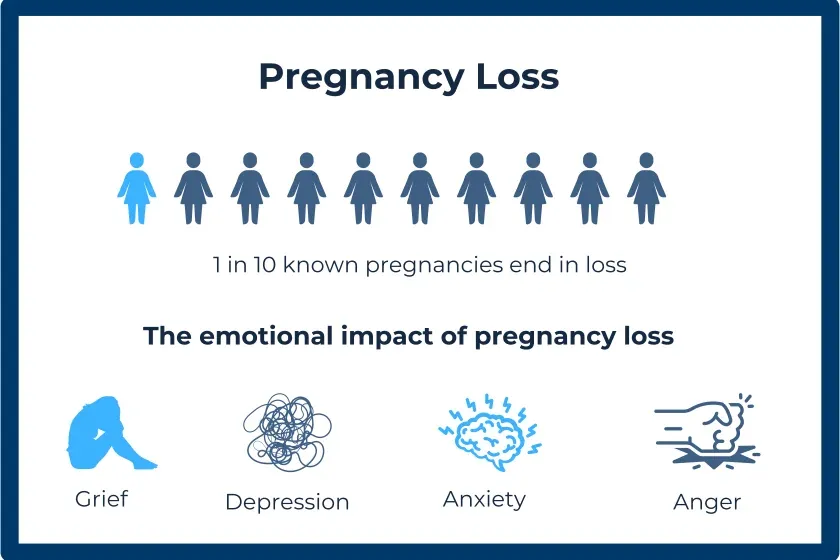
Pregnancy loss is very common. Approximately 10% of known pregnancies end in loss. Miscarriage is the most well-known type of pregnancy loss, but there are other types. The different types of pregnancy loss differ in terms of when they occur in a pregnancy. Whether a pregnancy loss occurs early or late in pregnancy, it can have a significant emotional impact on the mother and family.
Chemical pregnancy
A chemical pregnancy is the earliest type of pregnancy loss. Some women have a positive at-home pregnancy test, only to find out that they are not pregnant when they go to their OBGYN. Some women may experience bleeding and cramping, but others do not have any symptoms.
Blighted ovum
A blighted ovum happens when an egg is fertilized and implants in the uterus, but an embryo does not develop. On an ultrasound, a blighted ovum will appear as an empty sac with no heartbeat.
Threatened miscarriage
This occurs when a woman experiences bleeding or cramping, but an ultrasound shows that the cervix is closed and the baby has a heartbeat. When this happens, there is a threat of a miscarriage in the future. If the cervix is open and bleeding intensifies, then it is called an inevitable miscarriage.
Miscarriage
A miscarriage is a loss that happens during the first 20 weeks of pregnancy. The risk of a miscarriage is highest during the first 13 weeks of pregnancy and decreases thereafter. A complete miscarriage is when the body is able to expel the pregnancy on its own. This can happen at home and does not require treatment. Sometimes the body can have trouble passing the placenta or fetal tissue out of the uterus, which is called an incomplete miscarriage. If this happens, a doctor may prescribe medication or conduct a dilation and curettage, which is best known as a D&C. This is a surgical procedure to complete the miscarriage process.
Stillbirth
A stillbirth is a loss that occurs after 20 weeks of pregnancy. It can occur before or during delivery. It is further divided into early (20 to 27 weeks), late (28 to 36 weeks), and term stillbirth (after 37 weeks). Stillbirth happens in approximately one out of every 175 births. Due to advances in medical technology and prenatal care, the number of late and term stillbirths have decreased.
What are the signs of a miscarriage?
The signs of a pregnancy loss can vary depending on the type of loss. Miscarriage symptoms usually include abdominal and pelvic cramping and vaginal bleeding. When it comes to stillbirth, the first sign may be a noticeable change in fetal movement. If you experience any of these symptoms, contact your healthcare provider right away. They will conduct an ultrasound and check your human chorionic gonadotropin (hCG) hormone levels.
What are the causes of a miscarriage?
The most common cause of miscarriage is chromosomal abnormalities in the developing embryo or fetus. Both a sperm and egg contribute 23 chromosomes during fertilization, which pair up with one another. If something goes wrong during this process, a chromosomal abnormality may occur. Some chromosomal abnormalities can survive, like in the case of a child born with down syndrome, but others cannot continue to develop. This can lead to pregnancy loss. Certain factors can also increase the risk of a miscarriage such as:
- Older maternal age
- Thyroid disease
- Diabetes
- Smoking during pregnancy
- Excessive caffeine use
- Poor nutrition
If you’re concerned about your risk for a miscarriage, speak with your OBGYN, midwife, and/or reproductive endocrinologist.
The emotional impact of pregnancy loss
Pregnancy loss can have a significant emotional impact on families. Recovering from a miscarriage can involve an array of emotions, including grief, depression, and anxiety.
Grief and depression
Grief is a common emotional response to a loss. It involves emotions like sadness, shock, and anger. Everyone grieves differently and there is no ‘right’ way to feel after a loss. Many people who develop grief after a loss initially have a hard time, but slowly they start to accept the loss. Others may struggle with their grief and develop depression. Signs that you or a loved one may be depressed include:
- Feeling down most days for a large portion of the day
- Feeling less interested in things that were once enjoyable
- Changes in sleep, weight, or appetite
- Feeling more tired than usual
- Difficulty concentrating
- Changes in movement, like appearing more tense or lethargic
- Suicidal thoughts
If you or someone you know is experiencing suicidal thoughts, call or text the 988 Suicide & Crisis Lifeline.
Anxiety
Anxiety is excessive worry that interferes with many areas of a person’s life. It is a common reaction to pregnancy loss. After a miscarriage or stillbirth, parents may become preoccupied with thoughts about what happened or what could happen in the future. For example, it’s common for the mother to blame herself and question whether she did everything she could have to prevent it. Even when she is reassured by her providers, she may still feel responsible for the pregnancy loss. Anxiety can range from mild to severe and include symptoms like:
- Worry that is hard to control
- Irritability
- Difficulty sleeping
- Low energy
- Muscle tension
- Difficulty concentrating
Anger
Anger is another common reaction to pregnancy loss. People may feel anger toward specific people, like themselves, their partner, or their healthcare provider, or experience a more general sense of anger. They may feel angry about the unfairness of life. Pregnancy loss can cause people to question their faith, which can arouse a lot of internal conflict.
Grieving pregnancy loss
Grief is a painful process that is unique to each person. Swiss-American psychiatrist Elizabeth Kubler-Ross developed a grief model that includes five stages. It’s important to note that the stages are not necessarily linear. The stages of grief model has been challenged by mental health experts in recent years, but many professionals do believe that it describes some of the common reactions that people experience following a loss. The stages are:
- Denial: During denial, you may experience shock, confusion, and numbness. You may try to avoid thinking about the loss and resist accepting that it really happened.
- Anger: The anger stage involves frustration and rage. Your anger may be directed toward yourself or others.
- Bargaining: During bargaining, you may find yourself thinking “what if?.” You may think about the loss over and over again and wonder how it could have been prevented.
- Depression: Depression happens when you acknowledge that the loss is real. As a result, you may feel sad, hopeless, and disconnected from yourself and others.
- Acceptance: When you reach acceptance, you acknowledge that the loss has happened and how much it has changed you. It does not mean that you are okay with what happened, but you can begin to move forward.
As you deal with your grief, you may go through one, some, all, or none of these stages. Remember, there is no right way to grieve a loss.
Recovering from a miscarriage or pregnancy loss
Many people who have experienced pregnancy loss find comfort in honoring their baby in some way. There is no ‘right’ way to do this and different approaches work for different families. Some different ways you can honor your baby include:
- Make or dedicate something in memory of your child: Some women choose to wear a piece of jewelry dedicated to their baby or plant a memorial tree or flower in their garden.
- Write a letter to your child: This can be an opportunity to express your love to your baby and any other thoughts or feelings you may have.
- Donate or volunteer for a charity close to your heart: You may choose a charitable organization that helps families dealing with pregnancy loss or you may choose another charity that is meaningful to you.
- Create a keepsake of photos or memories: You may decide to frame ultrasound photos of your baby or create a memory box.
- Hold a ceremony to honor your child: Depending on when your pregnancy loss happened, you may be offered the opportunity to cremate or bury your baby. Each state differs in their regulations, but do not hesitate to ask your provider or hospital about your rights. Even if you cannot hold a formal ceremony, you can hold your own private ceremony if you wish.
There is no right or wrong way to cope with a miscarriage or stillbirth. You may choose one, all, or none of the suggestions above. Either way, remember that your grief is valid. If you find that speaking with family and friends is not enough to cope with your loss, you may consider other sources of support.
Support for pregnancy loss
Pregnancy loss is an incredibly painful and isolating experience. Having the right support around you is very important as you navigate this difficult time. Support can come in many forms, including family and friends, therapy, or a support group.
Family and friends
Family and friends may provide a source of comfort following a pregnancy loss . Some people who have experienced a miscarriage or stillbirth share that they initially feel supported, but then feel that the support stops. Some have reported that loved ones may also make comments that can feel insensitive, like that the loss was “meant to be” or “at least you have another child.” These comments can be very hurtful and may put a wedge in these relationships.
Therapy
Therapy can provide a beneficial source of support following a pregnancy loss. A therapist who is trained in grief can help you process the trauma of your experience and work through your grief. When it comes to grief therapy, the goal is not to get rid of your feelings or forget about your baby, but rather to help you cope with them. Grief therapists understand that you can’t forget your loss, but you can move forward.
Support groups
Support groups for families affected by miscarriage and pregnancy loss are available in-person and online. They can provide an opportunity to share your experiences with other families who have gone through the same thing. Support groups provide a forum to openly express a range of feelings about what you’re going through, whether it be anger, hurt, or shame, with people who have had similar experiences. Postpartum Support International (PSI) provides several support groups, including ones for families impacted by pregnancy loss. SHARE Pregnancy and Infant Loss Support also offers online bereavement support groups and chat support for anyone who has lost a baby.
Additional Resources
For more information and support, see the following resources:
- 988 Suicide & Crisis Lifeline - Call or text 988
- Postpartum Support International (PSI)
- PSI HelpLine - 1-800-944-4773
- National Alliance on Mental Illness (NAMI)
Pregnancy loss is an incredibly painful experience. Support, whether it’s from family and friends, a therapist, or a support group, can help you navigate the pain of pregnancy loss and find a way to honor your baby.
At Phoenix Health, we offer grief therapy and support for parents who have experienced a loss. Schedule an appointment with a maternal mental health specialist and start feeling better today.
- Start Therapy
Frequently Asked Questions
Perinatal grief carries unique features — the loss of anticipated identity, social disenfranchisement, and a bodily dimension that makes it especially complex. Many bereaved parents feel their grief isn't taken seriously. It deserves full recognition and appropriate support.
There is no should. Grief timelines are personal and unpredictable. What matters is that it's moving — not necessarily forward, but not completely frozen. If you feel stuck, isolated, or unable to function months later, that's a signal to seek professional support.
Partners grieve differently, and the birthing parent often carries a more embodied, immediate loss. This doesn't mean your partner feels less — they may process differently or feel pressure to be strong. Therapy, individually and together, can bridge that gap.
There's no universal right timeline. Some need to wait; others find trying again feels hopeful and healing. What matters is that the decision comes from your values and readiness. Our article on coping with a due date after loss addresses related emotions.
Yes. Grief therapy — EMDR, narrative therapy, and meaning-making approaches — can help you process loss without it taking over your life. You don't have to get over a loss to integrate it and eventually move forward.
Early loss is real loss. The depth of grief has nothing to do with gestational age. Finding a space — in therapy or community — where your loss is taken seriously is one of the most healing things you can do. Your grief is valid.
Ready to feel like yourself again?
Our PMH-C certified therapists are here for you — accepting insurance across the country.