Childhood Trauma & Parenting therapy covered by Ascension
"I swore I'd be different from my parents. Then I heard myself say the exact same thing they said to me."
 +9 more
No commitment. We'll confirm your coverage before your first session.
Using your Ascension benefits
Phoenix Health is out-of-network with Ascension, and that matters less than it sounds. You can still see a PMH-C certified perinatal specialist here; the difference is how the money moves. You pay us directly, and once a month we issue a superbill — an itemized receipt with the diagnosis and procedure codes your plan needs — which you submit to Ascension for reimbursement against your out-of-network behavioral health benefits. Ascension is a Catholic health system that sells plans mainly in the markets where it runs hospitals, and those plans tend to be narrow network, so how much comes back to you varies more than it would with a national carrier. We find out what your specific plan reimburses before your first session rather than after. Our clinicians treat postpartum depression, perinatal anxiety, birth trauma, and pregnancy loss, and sessions are FSA and HSA eligible whether or not Ascension reimburses them.
Does Ascension cover therapy for childhood trauma resurfacing in parenting?
Yes. This is billed against your own diagnosis -- commonly PTSD, complex trauma presentations, depression, or an anxiety disorder -- under your Ascension behavioral health benefit. The fact that parenting is what brought it to the surface does not change the coverage; you are the patient, and the treatment is ordinary outpatient psychotherapy.
Phoenix Health is out-of-network with Ascension: you pay us directly and we issue a superbill once a month — not after each session — which you submit for reimbursement against your out-of-network behavioral health benefits. You pay Phoenix Health directly and we issue a superbill once a month that you submit to Ascension against your out-of-network benefits. Ascension Personalized Care plans are generally narrow-network products built around Ascension's own hospitals, so out-of-network reimbursement varies widely and some plans reimburse nothing outside the network. Confirm before you start. Sessions are FSA and HSA eligible regardless of what your plan reimburses.
Checking it yourself: Call the member services number on your Ascension card and ask: do I have out-of-network outpatient behavioral health benefits, what is my out-of-network deductible, and what share of the allowed amount is reimbursed? We run this check for you before your first session at no charge.
Your card might say any of these — all of them are Ascension:
✓ Out-of-network with superbill
You pay us directly, and we issue a superbill once a month that you submit to your plan for reimbursement.
✓ Benefits verified upfront
We confirm your copay and deductible before your first session, at no charge.
✓ Telehealth covered
Your plan covers virtual sessions at the same rate as in-person specialist visits.
You might benefit from therapy if…
- ✓You hear yourself say or do something your parent did and it stops you cold
- ✓You're reactive in ways with your child that don't feel like the parent you want to be
- ✓Your own childhood had abuse, neglect, addiction, mental illness, or chronic instability, and it's showing up now
- ✓You feel triggered by specific developmental stages or behaviors in your child
- ✓You're afraid of repeating what was done to you, and the fear itself is interfering
- ✓You haven't done much therapy on your past and parenting is making it impossible to ignore

Dr. Emily Guarnotta
Psychologist & Founder
From our founder
Becoming a parent is one of the most common reasons people finally do their childhood work. The patterns that ran your adult life quietly start showing up in ways you can't ignore once a small human is depending on you. The work to change them is meaningful for you, and it ripples forward into your child's life in ways you may never fully see.
What therapy looks like
Our Childhood Trauma & Parenting specialists who accept Ascension
Most Phoenix Health therapists hold PMH-C certification — the gold standard in perinatal mental health.
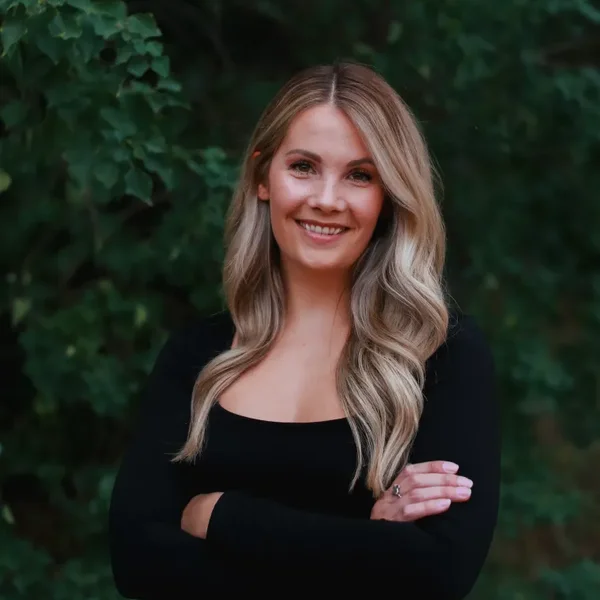
Amanda Flowers
LPC, PMH-C · Licensed therapist
Works with perinatal OCD and neurodivergence, using body-based tools to calm the nervous system.
Licensed in TX, MT
%20(1).png)
Natalia Cruz Navarro
EspañolLCSW · Licensed therapist
12+ years with families through high-risk pregnancies, fetal diagnoses, and NICU stays.
Licensed in CA

Lyndsay Ward
LCSW, PMH-C · Licensed therapist
An attachment theory expert who helps you unpack how your childhood shows up in your parenting.
Licensed in NY

Golda Fleischman
LMSW · Licensed therapist
A birth doula before she was a therapist, she helps you prepare for a birth or process a hard one.
Licensed in NY
Stories that may sound familiar
These are examples, not client reviews. We don't publish our clients' words. What's said in therapy stays there.
“"My parents weren't abusive in the ways people recognize. It was more that I never felt safe or seen as a child. Becoming a parent cracked something open in me about what that had cost me. My therapist helped me grieve the childhood I needed and didn't have, which turned out to be what let me give my son a different one."”
“"I swore I would parent differently than I was parented. And I was, mostly, until I was exhausted enough that the old patterns came out. That terrified me more than anything. My therapist helped me understand the difference between breaking a pattern and never having it, and gave me tools to interrupt it before it lands."”
“"I knew I'd had a hard childhood. What I didn't know was that having my son would bring all of it back at volume. A specific tone of voice would set me off. A moment of frustration would spiral into shame I recognized from being small. My therapist helped me understand what was being triggered and gave me tools so my son doesn't have to live inside my history."”
“I had done therapy years ago and thought I was fine. My son turned three and I started reacting to him in ways I hated. My therapist helped me see what age I was when my own stuff started, and we worked there. Now I can stay present with my son even when he's pushing every old button I have.”
In-network with
Ascension.
Most clients pay less than $20 per session.
Accepted Insurance Networks




Your rights under federal parity law
Under the Mental Health Parity and Addiction Equity Act (MHPAEA), your insurer cannot impose more restrictive limits on mental health coverage than on comparable medical or surgical benefits.
See full coverage map →Ready to start Childhood Trauma & Parenting therapy? Here’s how it works.
The whole process takes about 5 minutes. We handle insurance — you just show up.
- 1
Book your free call
A quick 15-minute chat to hear what you're going through, answer your questions, and make sure we're a great fit for your needs. No cost, no commitment.
- 2
Get matched
We'll pair you with the right specialist for your specific situation. We'll also check your insurance, so you know your exact cost per session before moving forward.
- 3
Start your first session
Meet your therapist from the comfort of home. No commute, no waiting rooms, no judgment. Most clients notice a real difference within just 2 to 3 sessions.
No commitment · Most insurance accepted · Available this week
Common questions
- Yes. This is billed against your own diagnosis -- commonly PTSD, complex trauma presentations, depression, or an anxiety disorder -- under your Ascension behavioral health benefit. The fact that parenting is what brought it to the surface does not change the coverage; you are the patient, and the treatment is ordinary outpatient psychotherapy. Phoenix Health is out-of-network with Ascension: you pay us directly and we issue a superbill once a month — not after each session — which you submit for reimbursement against your out-of-network behavioral health benefits. You pay Phoenix Health directly and we issue a superbill once a month that you submit to Ascension against your out-of-network benefits. Ascension Personalized Care plans are generally narrow-network products built around Ascension's own hospitals, so out-of-network reimbursement varies widely and some plans reimburse nothing outside the network. Confirm before you start. Sessions are FSA and HSA eligible regardless of what your plan reimburses.
- Yes. Trauma is not only about specific events. Chronic emotional neglect, inconsistent caregiving, parental mental illness, or growing up in a high-stress household can leave deep imprints. Many clients arrive convinced their childhood "wasn't that bad" and then discover, in the consulting room, how much of their adult life is shaped by it.
- Not necessarily. The work is about understanding what happened and how it shows up now, not about prescribing what your relationship should look like today. Some clients change boundaries with family, some don't. That's your call, made with much more clarity than you have now.
- Yes, and the fact that you're even asking the question is a strong protective factor. Parents who actively work on their own patterns are dramatically less likely to repeat them. This is exactly the kind of work that breaks cycles.
- Becoming a parent activates a lot of early material. Old attachment patterns, fears around vulnerability, identification with or fear of becoming your own parent, and body memories around caregiving all surface. Many people who never had clear trauma symptoms find they emerge in postpartum, sometimes for the first time.
- PMH-C (Perinatal Mental Health Certification) is awarded by Postpartum Support International (PSI) to clinicians who have completed advanced training in perinatal mental health — covering postpartum depression, anxiety, OCD, birth trauma, and related conditions. It represents the gold standard of specialization in this field.
- If you're struggling — with your mood, your thoughts, your relationship, or just how you're coping — that's enough of a reason to talk to someone. You don't need a diagnosis. A free consultation is a low-commitment first step.
From the Phoenix Health resource center
Articles and guides about childhood trauma & parenting
Trusted by leading voices in parenting and mental health
OBs, doulas, and pediatricians refer their patients to us because we specialize in maternal mental health.






The sooner you start,
the sooner you'll
feel like yourself again.
You've been surviving. It's time to start healing.
No commitment · Covered by insurance · Available this week
Learning resources
🌳Read our Childhood Trauma & Parenting guides →Often goes alongside